
A base layer is the first layer directly on your skin. It moves sweat away from your skin so it can evaporate. That keeps you drier and so warmer during breaks. Which one suits you depends on intensity, duration and cold. With the Odlo Base Layer System, you choose in three steps: intensity, technology, warmth level.
At a glance
A base layer is the first layer of clothing directly on your skin.
It moves sweat away from your skin to keep you dry and warm.
It is the first layer of layering, beneath the mid layer and outer layer.
The right base layer depends on intensity, temperature and duration.
With the Odlo Base Layer System, you choose in three steps: intensity, technology, warmth level.
Table of contents
What is a base layer?
A base layer is the lowest layer of clothing, the one you wear directly on your skin. Its most important job is to move moisture from your skin into the next layer, which is essential for a good body climate. A base layer stops you getting cold (in winter) or cools your body through evaporation (in summer). This makes the base layer the most important layer of your sports clothing, because a mid layer or a high-quality jacket can only work at its best if moisture doesn't build up.
At Odlo we use "base layer" and "technical underwear" as synonyms.
What is the difference between base layers, thermals and ski base layers?
Base layer is the umbrella term, and they come in light and warm versions. Thermal underwear is for cold conditions, often made from thicker, brushed fabrics (Active Warm, Performance Warm or Merino Warm). Ski base layers are the same thing, named by activity. Every pair of thermals is a base layer – but not every base layer is thermal underwear.
What are the benefits of base layers?
Sweat cools your body by evaporating on your skin. A base layer moves moisture away from your skin so it can evaporate, rather than holding on to it like cotton. A base layer doesn't actively cool: during high exertion it lets sweat evaporate, and during breaks it keeps your skin drier and therefore warmer.
If moisture stays in your clothing, you cool down quickly during breaks or in wind. Wind and movement also reduce the insulation of your clothing. If the first layer directly on your skin is damp, the performance of the whole system drops. That is why the base layer is the foundation of any good layering system.
The material also plays a role when it comes to odour: merino naturally controls odour. With synthetics, an added technology such as HeiQ Mint improves odour control. You can read more about this in the materials section below.
Why not cotton?
Cotton holds significantly more sweat than synthetic base layers, especially when you sweat. During breaks or in wind, cotton then cools you down faster (see the study by Raccuglia et al. 2018). When you sweat and are physically active, a base layer made from technical fibres is the far better choice and ensures a high level of comfort.
The 3-layer system: base layer, mid layer, outer layer
Layering (3-layer system) combines three layers: the base layer, the insulating mid layer and the outer layer (jacket and trousers) for protection from wind, rain or snow. The base layer keeps your skin dry, because a wet inner layer reduces the insulation of your entire clothing system, which has also been studied scientifically (Bakkevig & Nielsen 1994).
What do you wear under your ski jacket? A comfortable base layer directly on your skin, a warm mid layer when it's cold and a protective jacket on top.
Read more: 3-layer system and mid layer guide.


Which base layer is right for me? Two steps to the perfect choice.
Choosing the right base layer takes two steps. How intensely do you move, and at what temperatures?
The first answer lets you choose the right technology, such as Active, 100% Merino, Merino or Performance. The second answer points to the best warmth level.
When it comes to skiing, it depends a little on what kind of skier you are.
Fast, sporty skiing means intense movement. Choose Performance (synthetic) or Merino (Blend) for the best moisture transport, specially mapped to your body zones, so you don't have to freeze at the lift after a quick run. Your base layer reliably moves sweat from your skin to the next layer, and you stay warm and dry.
Performance Base Layers Women | Performance Base Layers Men
If you're a little slower on the slopes, warmth comes first and you choose Active (synthetic) or Merino. They keep you nicely warm and dry. These base layers also offer the moisture management you need, but you can do without the special body-zone ventilation.
Active Base Layers Women | Active Base Layers Men
When running, you're moving intensely. Choose Performance (synthetic) for maximum sweat transport during fast sessions – or merino if you want natural warmth and odour control for long runs.
X-Light, Light, Warm or X-Warm
X-Light: For hot summer days, intervals and maximum heat. Ultra-thin, highly breathable and quick-drying – so you stay cool when your pulse rises.
Light: The right choice if you sweat a lot, run intervals or wear the shirt as a base layer under a weatherproof jacket.
Warm: Perfect for cold winter days (around 0 °C combined with a mid layer or a running jacket) or as a warming solo layer in cool, dry weather.
X-Warm: Perfect for very cold winter days, or when you're outdoors and moving less intensely.


Which base layer suits which season and sport?
Which base layer you need depends on temperature, intensity and duration. The more intense your activity, the lighter the warmth level can be. Everyone feels the cold differently. The table is therefore a guide, not a fixed rule.
Running, cycling, ski touring uphill and cross-country skiing are intense. Cross-country skiing demands significantly more of you than skiing on the piste.
Season | Running | Cycling | Hiking | Skiing | Ski touring | Cross-country skiing |
|---|---|---|---|---|---|---|
Spring | Light - Warm | Light - Warm | Light - Warm | Light | Light | Light |
Summer | X-Light - Light | X-Light - Light | Light - X-Light | – | – | – |
Autumn | Light - Warm | Light - Warm | Light - Warm | – | – | – |
Winter | Warm | Warm | Warm | Warm - X-Warm | Warm | Warm |
Do I need thermals at 0 °C?
0 °C falls within our Warm range (−10 to +5 °C). At high intensity, a light base layer can be perfectly sufficient. How cold you feel is very individual, though. So listen to your body and choose the warmth level you feel comfortable in.
Merino or synthetic: which material is best?
No material is better across the board. The choice depends on your preferences and on how you plan to use your base layer. At Odlo, we work with merino, nature's performance fibre: warm, breathable, soft and odour-controlling, which can be an advantage especially on multi-day trips.
We also work with synthetic fibres, which we have been developing since 1948. "For us, every material has its place in the world of outdoor performance." Our view on the merino vs. synthetic debate
Feature | Merino | Synthetic |
|---|---|---|
Moisture | absorbs water vapour, up to around 30% of its dry weight (industry figure) | passes moisture on quickly |
Drying | usually slower | fast |
Odour | naturally odour-controlling | holds on to more odour, especially polyester |
Durability | more sensitive to abrasion | durable |
Care | max. 30 °C, wool or delicate cycle | 40 °C or as per the care label |
Intensity | low to medium | low to high |
When merino absorbs moisture, it releases a little warmth and feels less cold when damp. This effect is only temporary: truly wet clothing will chill you, whatever fibre it is made from.
Some of our base layers for high intensity combine merino with synthetic fibres in a seamless knit, for example 59% merino, 28% polyamide, 10% polyester and 3% elastane. This is how we combine warmth with fast drying.
Which merino weight for which temperature?
At Odlo, merino comes in three thicknesses:
160 g/m²: our lightest option for milder temperatures (= light)
200 g/m²: warm, for cool conditions (= warm)
260 g/m²: extra warm, for cold conditions (= x-warm)
As a guide: for mild conditions, around 115–160 g/m² works well. In the cold, go for 200 g/m² and up. For very low temperatures, choose 260 g/m² and up.
You can read more in The right weight for merino clothing and in Merino in summer.
Where does our merino wool come from?
Our merino wool comes from New Zealand, South Africa and Australia. A Norwegian knitting mill in Norway knits the merino wool for Merino 160, 200 and 260 for us. It is sewn in our own factory in Romania, where we have been producing since 2003. You can read more in From Norway to Romania.
Is merino wool itchy?
According to current research, the itch of wool is a mechanical irritation and not an allergy. Coarse fibres from around 30 µm trigger the itch. Fine merino wool with an average fibre diameter below about 19–21 µm is not perceived as itchy. Current studies also do not show that the wool fibre is a skin allergen (review in Acta Dermato-Venereologica, 2017).
Our merino wool is exceptionally soft. Simply try it for yourself.
What helps against odour in synthetic base layers?
For many of our synthetic base layers, we use HeiQ Mint. It is a finish based on mint oil from the Swiss company HeiQ. It limits the build-up of odour, so you can wash less often. Important: it is a finish and not a fibre technology. Find out more at HeiQ Mint.


How tight should a base layer fit?
A base layer works best close to the body: in contact with your skin, but without cutting in. This way it takes moisture directly from your skin and passes it on, so the moisture can evaporate. Elastic materials adapt to your movement. At Odlo, we offer two fits for this: Fitted and Slim.
Our fits at a glance:
Fitted: comfortable, close-to-body fit
Slim: body-hugging performance fit
Our Performance base layers are generally cut "Slim", while Active and Merino are "Fitted".
Find out more in our size chart.
What do Seamless and Body Mapping mean?
Both describe how we design and knit a garment. This is our know-how.
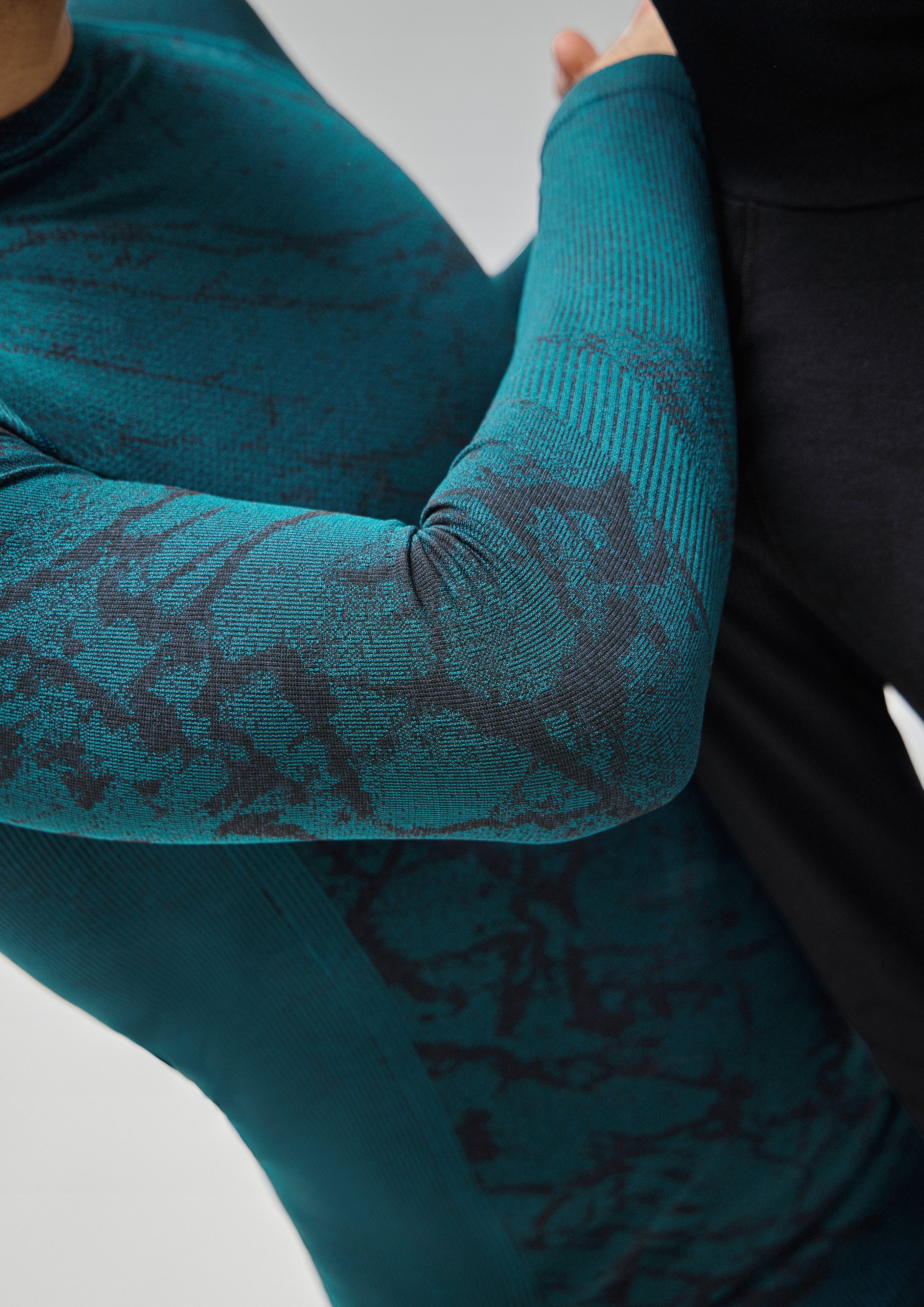
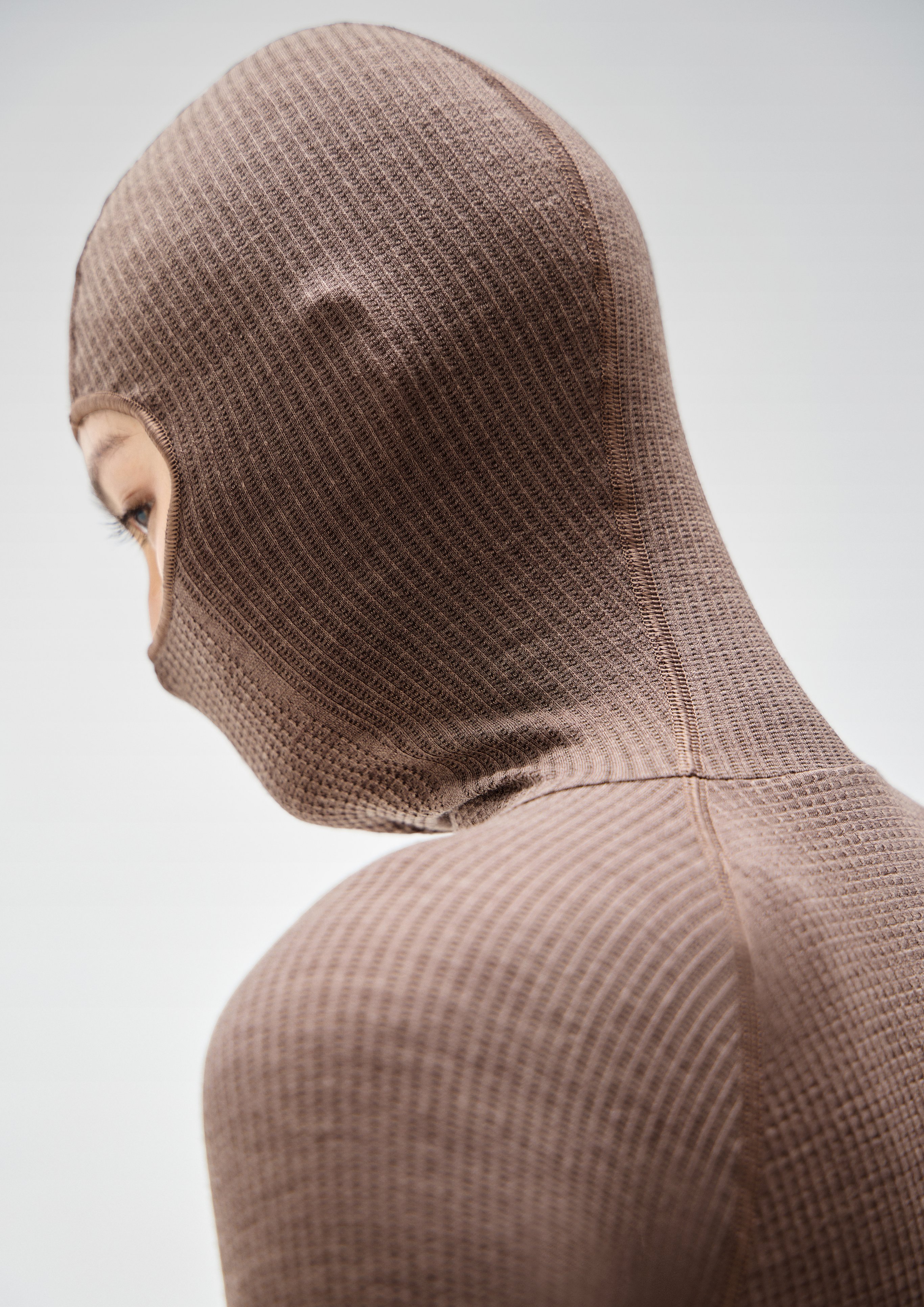
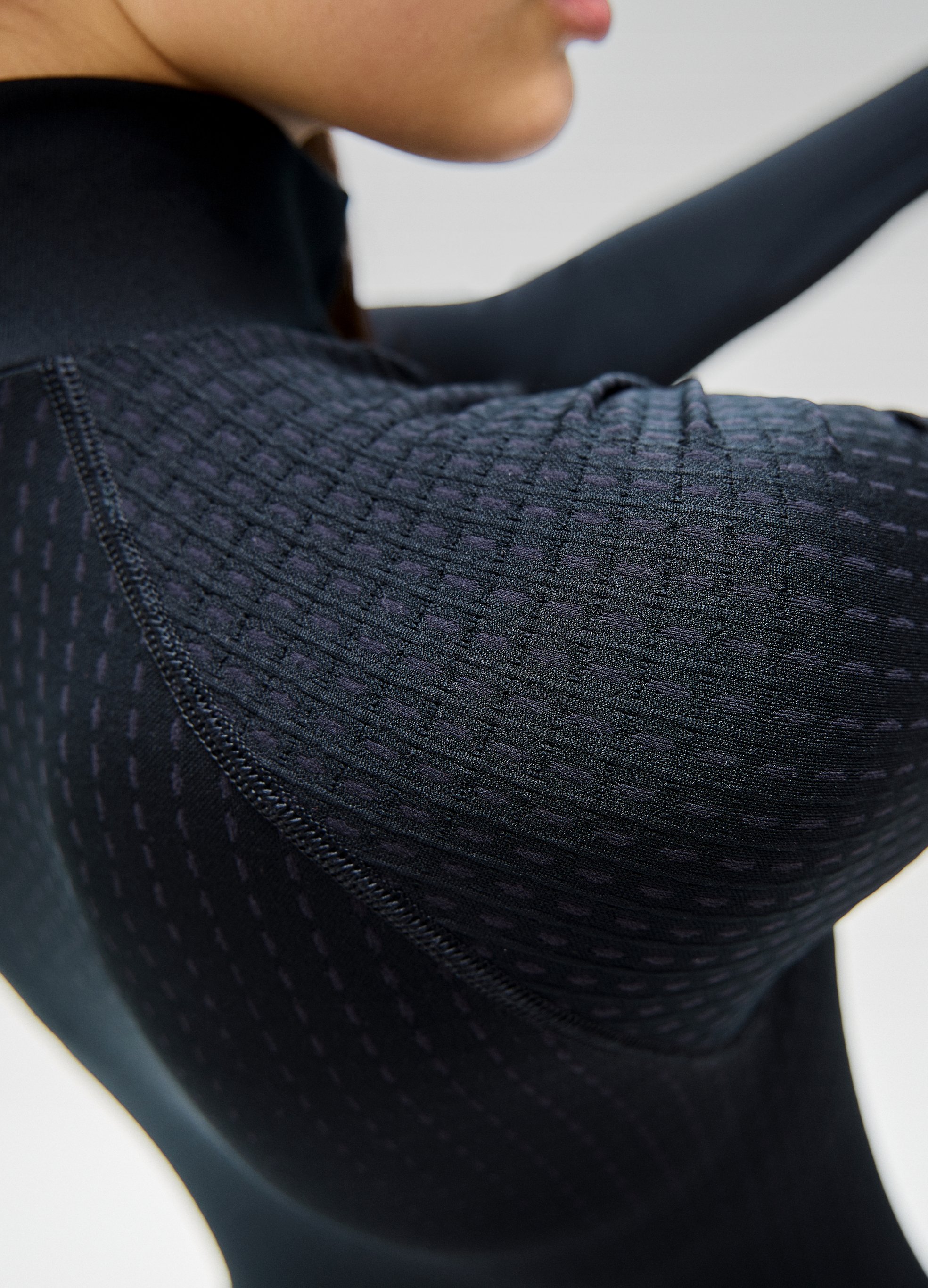
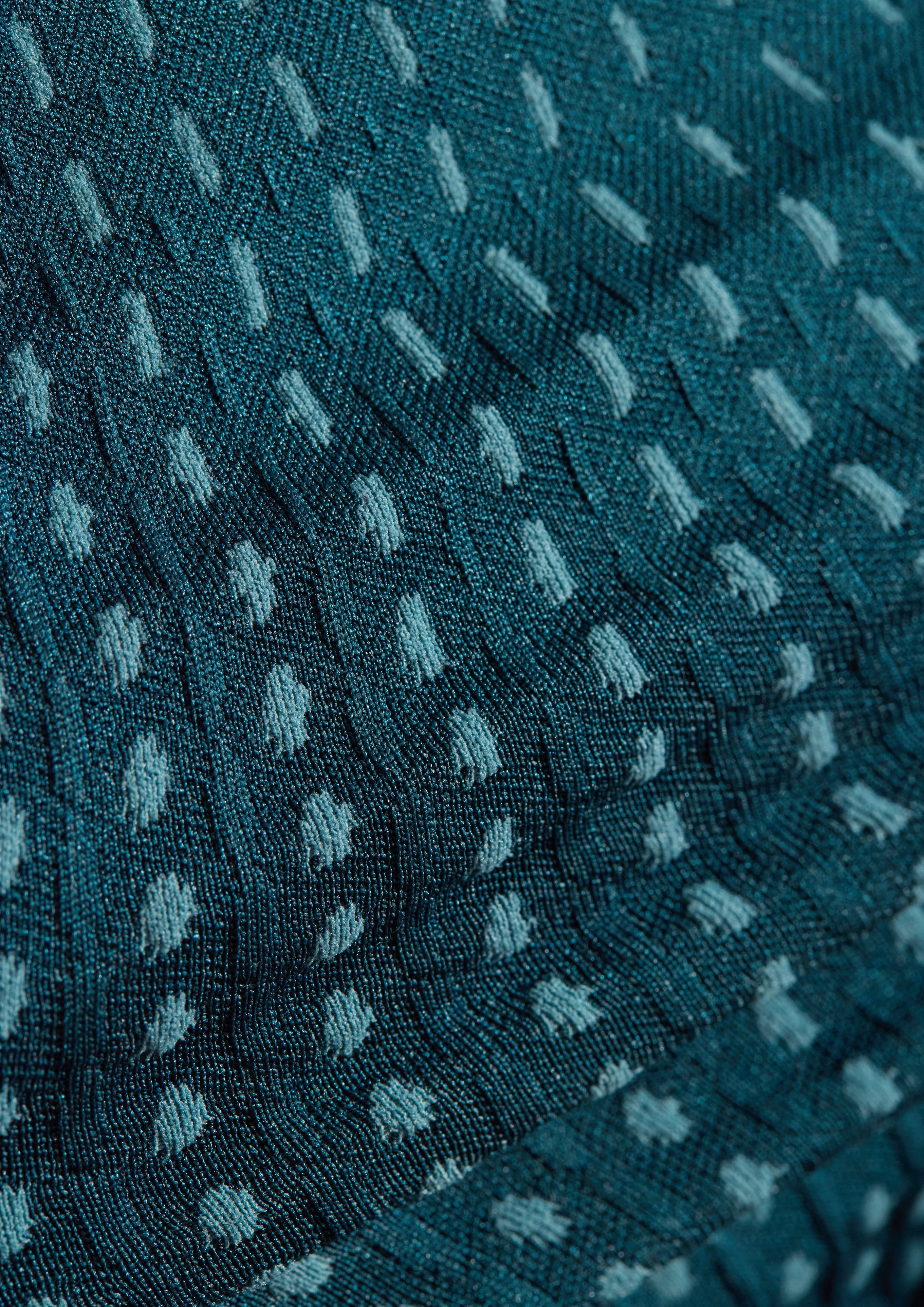
Seamless: We knit the garment in one piece. This means fewer seams, less chafing and 4-way stretch for freedom of movement. The seamless transitions come from our Seamless knitting technology and our many years of experience in producing base layers.
Body Mapping: We design every garment around the body and place ventilation, warmth or support exactly where each body zone needs it. For most people, the body sweats most along the middle of the back, followed by the middle of the chest. Some of our warm base layers have double-layer insulation in key body zones, for protection against the cold.
How do I wash base layers?
For base layers, the first rule is: follow the care label. Pure merino wool is washed at a maximum of 30 °C on a wool or delicate cycle. Blended fabrics usually go in the machine at 30 °C, synthetic fibres at 40 °C. It is better to skip fabric softener, as it can build up on the fibres and affect moisture transport.
Care by material
Material | Temperature | Cycle and detergent | Drying | Other |
|---|---|---|---|---|
100% merino | max. 30 °C | wool or delicate cycle, wool detergent | air dry, no tumble dryer | do not bleach |
Blended fabrics (merino + synthetic) | cold, 30 °C | mild detergent | no tumble dryer | do not bleach |
Synthetic | 40 °C (or as per the care label) | normal cycle, normal detergent; occasionally antibacterial detergent against odour | air dry, dries quickly | wash inside out; avoid high heat |
Heat combined with strong movement in the drum makes wool felt. Odour control does not replace washing. After light use, airing is often enough. After intense use, wash the garment. You can often wear merino longer between washes.
In any case, check the care label after purchase to make sure you are not caring for your base layer incorrectly, as we unfortunately cannot give any guarantee on this.
You can find more in our care guide.
Odlo base layers: tested materials and fair production
A base layer should feel good and be well made. All our base layers are OEKO-TEX 100 certified, meaning they are tested for harmful substances. For recycled fibres, we rely on GRS-certified materials and state the exact recycled content. We have been a member of the Fair Wear Foundation since 2008. You can find the details here.
Tested for harmful substances
All our base layers, First Layer and mid layers are OEKO-TEX 100 certified. This means they are tested for harmful substances and safe for your skin.
Recycled fibres
We choose fabrics made from recycled fibres with particular care. We rely on GRS-certified fibres with recycled content. You can find the exact share on our website, on the care label and in the Digital Product Passport.
Microfibres
Synthetic textiles release microfibres with every wash. If you wash less often and air your clothes instead, there are fewer wash cycles in which fibres come loose.
Fair working conditions
We have been a member of the Fair Wear Foundation since 2008. It currently rates us "Good". Our goal is "Leader" status by 2028.
Find your base layer: by intensity, technology and warmth level
First choose the intensity, then the technology and finally the warmth level to suit the temperature. Active or Merino suit low to medium intensity, Performance suits medium to high intensity. Our categories are sorted by gender and technology.
Find your base layer by intensity, technology and warmth level: Women / Men


Frequently asked questions about base layers
Explore more


