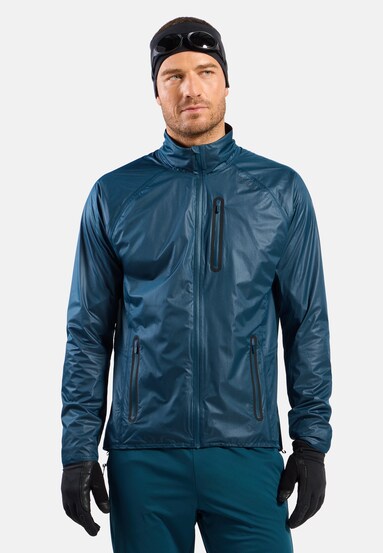
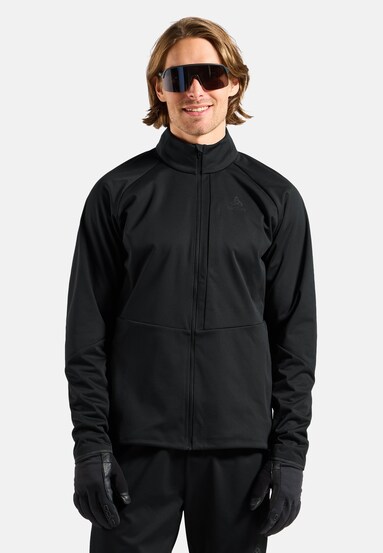
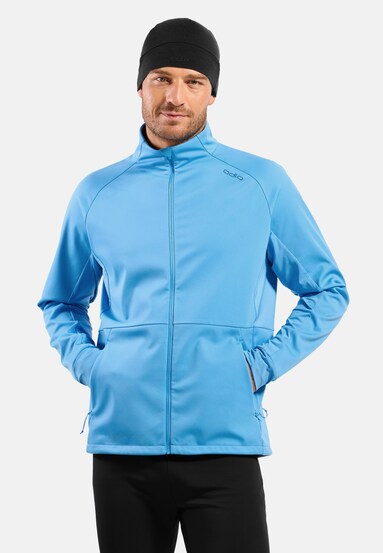
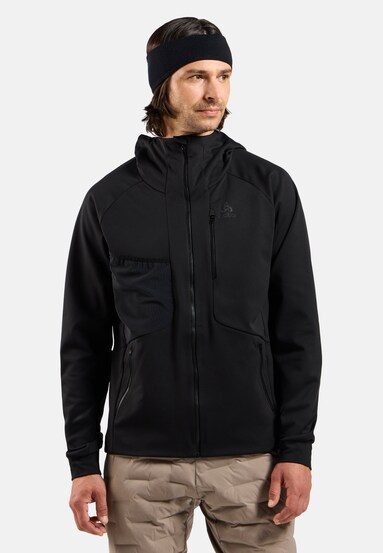
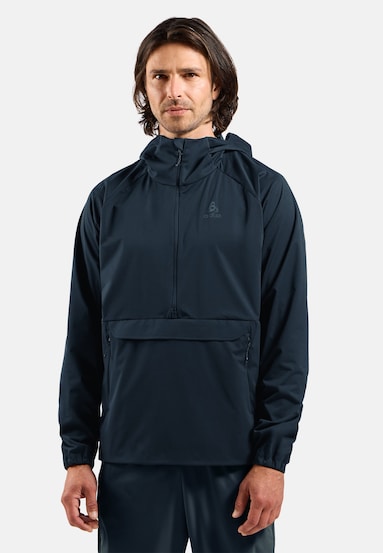
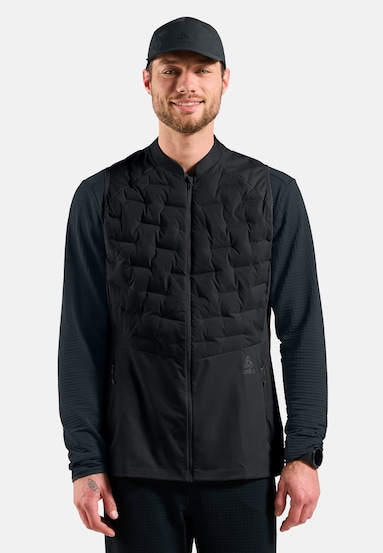
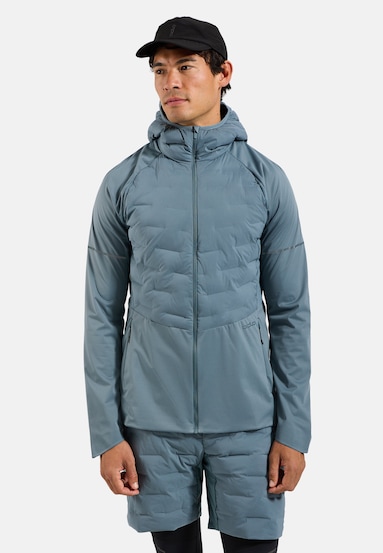
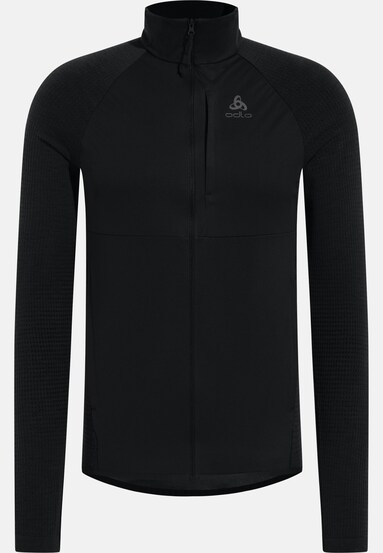
A good men's cross-country ski jacket blocks the wind, lets moisture escape and moves with you, whether you skate or classic ski. Which jacket suits you depends on temperature, wet weather and your pace. The range runs from windproof softshells and hybrid designs to the cross-country ski vest. Here's what matters when you choose a cross-country ski jacket, how to put together your cross-country skiing clothing and how to stay comfortable on long loops.
Which men's cross-country ski jacket is best for you?
Weather and pace decide. In cold wind, a windproof three-layer softshell works well. The hybrid jacket combines windproof softshell at the front and back with breathable Performance Wool on the arms and sides. At a high tempo or in mild weather, a water- and wind-resistant jacket made from a polyamide-polypropylene blend is enough. Polypropylene has cooling properties, which makes it ideal for intense sessions. When it's wet, choose a waterproof, insulated jacket.
What cross-country skiing clothing should you wear at minus 10 degrees?
The warmth levels apply to your base layer under the jacket, not to the jacket itself. At minus 10 degrees, choose Warm (comfort zone −10 °C to +5 °C) or X-Warm (comfort zone −20 °C to −5 °C). For extreme cold, a warm cross-country ski jacket that insulates is the right choice: with light Octa fleece, a brushed interior, a warmer softshell and windproof protection.
How do you layer your cross-country ski jacket?
Three layers create a microclimate. The close-fitting base layer moves moisture away from your skin. The mid layer warms you and stays breathable, so it's neither windproof nor waterproof. Your cross-country ski jacket is the outer layer and protects you from wind, rain and cold. Avoid cotton: it's not very breathable and dries slowly. A cross-country ski vest warms your core without restricting your arms.
Why does breathability matter in a cross-country ski jacket?
You generate a lot of heat when you ski. Breathable fabrics release excess heat and moisture, so you stay dry and don't overheat. In a men's cross-country ski jacket, laser-cut ventilation zones, back vents and stretch jersey inserts on the back and under the arms all help. The magnetic collar closure opens for more air without flapping.
How do you care for your cross-country skiing clothing?
Follow the care label sewn into each piece. Close all zips and turn items inside out. Wash only after two to three uses, without fabric softener or bleach. Wash synthetics at 40 °C and merino at a maximum of 30 °C with wool detergent. Air dry whenever possible, and dry merino flat. Skip the tumble dryer, except for padded and waterproof pieces.