
guides
What to wear cross-country skiing?
The layering basics of cross-country skiing and our cross-country ski clothing recommendations.
From mastering your rhythm to perfecting your glide, there’s no doubt cross-country skiing (or Nordic skiing) is tough on your body – and your performance apparel. Your gear’s job? To keep you warm but prevent overheating. Freedom of movement meets weather protection. All essentials for comfort and performance. Let’s check our cross-country outfit guide.
What do you wear for cross-country skiing?
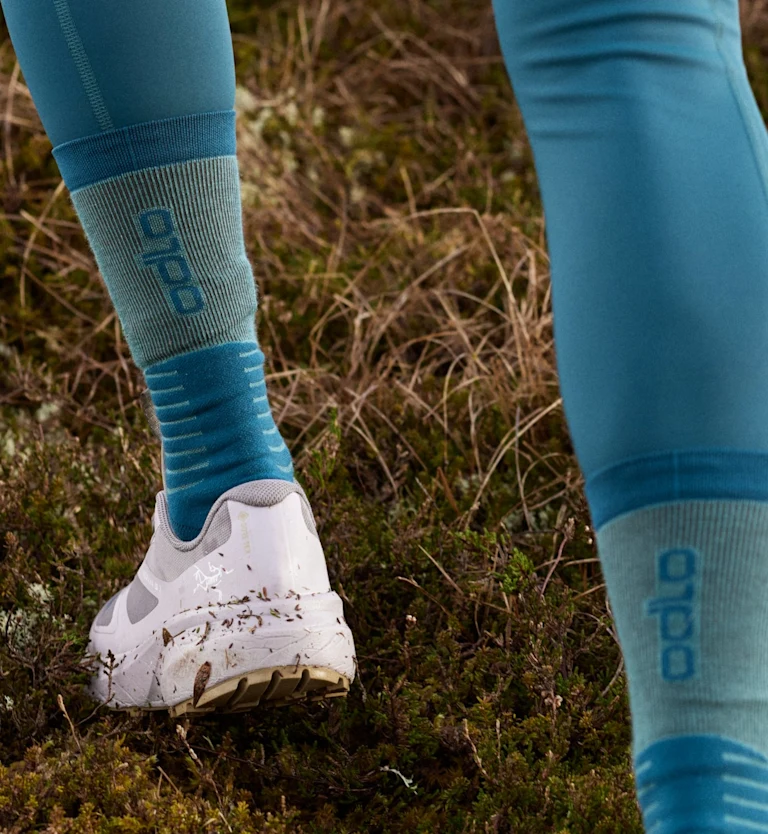
Start with a base layer next to your skin. Add a windproof softshell jacket, cross-country tights or slim windproof pants, a lightweight headband or beanie, thin gloves and cross-country socks. A mid layer is generally only needed in extreme cold. Keep everything lightweight and breathable, because you sweat at any temperature. Avoid cotton.
Wear a base layer next to your skin to move sweat away.
A mid layer is generally only needed in extreme cold.
Choose a breathable, stretchy, windproof softshell jacket.
Keep every layer lightweight, because you sweat at any temperature.
Avoid cotton. It holds moisture and leaves you cold and damp.
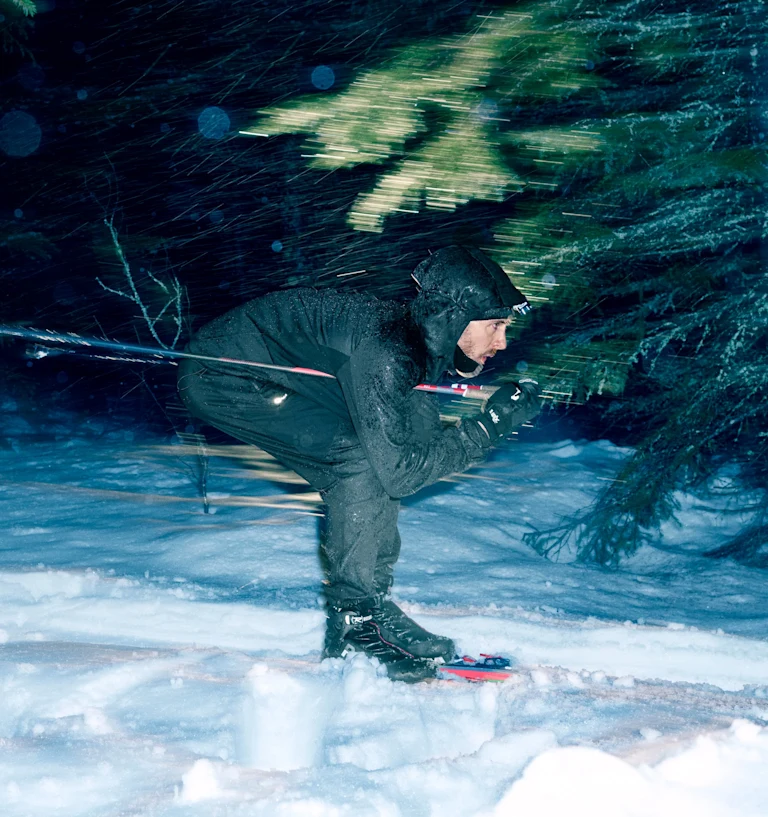
What should a cross-country ski outfit be?
Cross-country ski outfits should be breathable, lightweight and versatile. You work hard and sweat at any temperature, so your clothing needs to move moisture away from your skin, add little bulk and let you adjust as you warm up or cool down. Three qualities matter most:
BREATHABILITY
Select moisture-wicking, breathable layers to help regulate body temperature. Otherwise, your sweat can’t evaporate, trapping a layer of moisture against your skin that prevents drying, lowers your core temperature, and creates an unwelcome chill.
LIGHTWEIGHT
Overdressing equals overheating. Stick with the ‘less is more’ approach. By that, we mean lightweight layers without heavy insulation. You won’t want to shed a layer with every lap.
VERSATILITY
Manage your own micro-climate with versatile, adjustable cross-country ski clothing featuring vents, side zips, and a half- or full-zip front.
What to wear cross-country skiing: the 3-layer principle
For cross-country skiing, the 3-layer principle keeps things simple. A base layer moves moisture away from your skin. A mid layer insulates and dries quickly, but is generally only needed in extreme cold. A lightweight, stretchy, breathable windproof softshell completes it. You sweat at any temperature, so adjust to intensity and conditions.
To decide on your cross-country ski outfit, consider two factors:
Intensity: Are you going for a gentle Classic XC ski or honing your skating technique? Joining a biathlon or trying Nordic backcountry skiing?
Conditions: Sub-zero or a cool spring morning with temperatures expected to rise?
Remember, cross-country skiing is a full-body workout, and you’ll likely sweat whatever the temperature. So, prioritise lightweight, breathable, moisture-wicking clothing.
It helps to follow the 3-layer principle with a base, mid and outer layer. Of course, you can adapt this to the windchill, conditions and your personal preference. Now, let’s explore your three-layer outfit for cross-country skiing and its accessories.
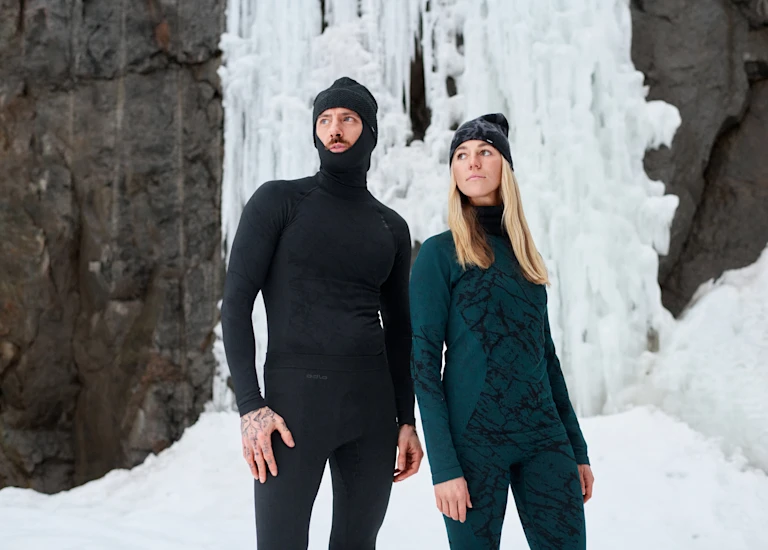
Base layer
Start with a cross-country base layer.
Form-fitting, next-to-skin clothing that transports moisture and keeps you warm, dry and comfortable. A long-sleeved top and thermal cross-country tights or leggings are best. Choose from these materials: Synthetics (such as polyester that contains recycled materials); Blends (a mix of synthetic and merino fibres); Merino wool, which also offers odour control. These materials all dry quickly, stretch easily and control sweat, so the choice is yours. Just avoid cotton, which absorbs moisture rather than wicking it, keeping you cold and damp.
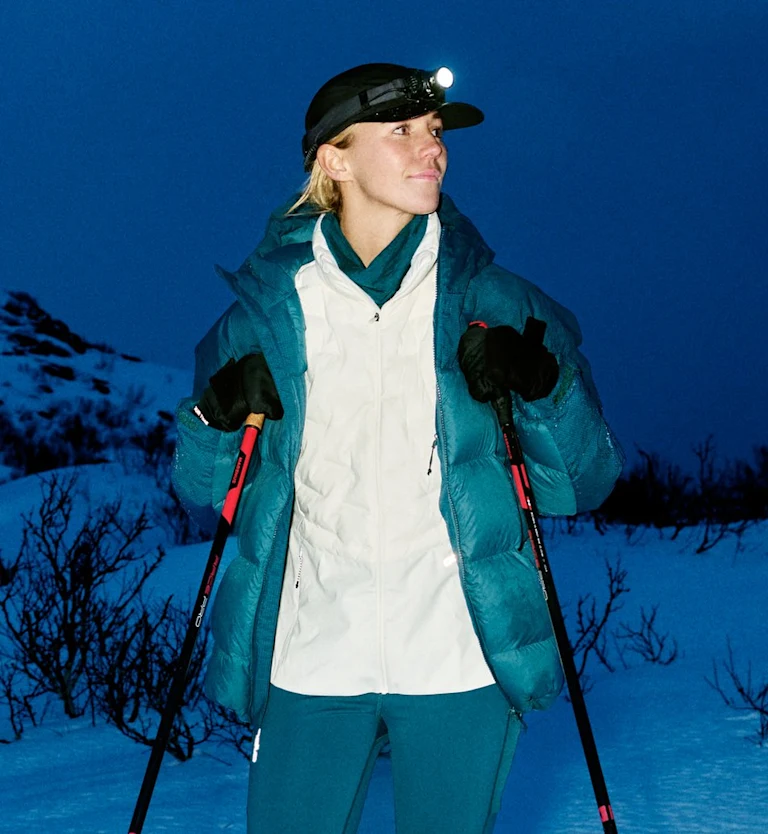
Mid layer
Cross-country mid layers are generally only needed in extreme cold, for insulation between base layer and jacket.
A good mid layer insulates and dries quickly. Our range includes insulating mid layers that work under a jacket in sub-zero temperatures, with a softshell in milder weather or on their own. We also offer mid layers with a softshell torso and seamless Performance Wool on the arms, side panels and hood, to wear under a jacket or vest or alone.
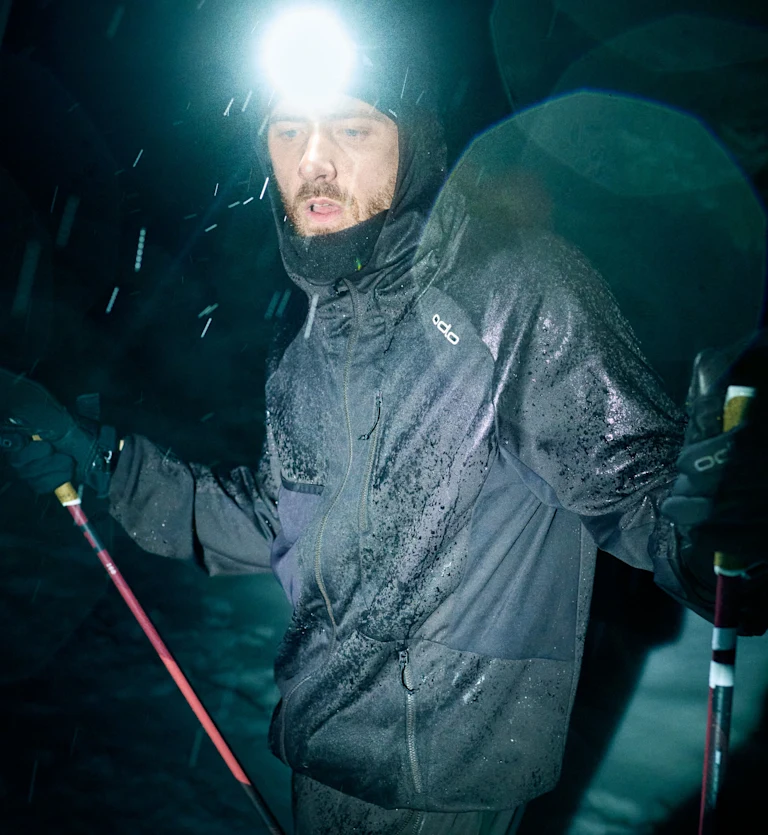
Outer layer
A windproof softshell is best.
Softshell jackets are lightweight, breathable and stretchy, moving with you when gliding. Moreover, softshells provide much-needed weather protection and warmth – perfect for stopping to check your smartwatch. Unlike other sports, cross-country ski jackets aren’t heavily insulated. They would only weigh you down and increase sweat. If you’re heading out in extreme weather, reach for a hardshell jacket – but make sure it’s breathable.
Pants and thights
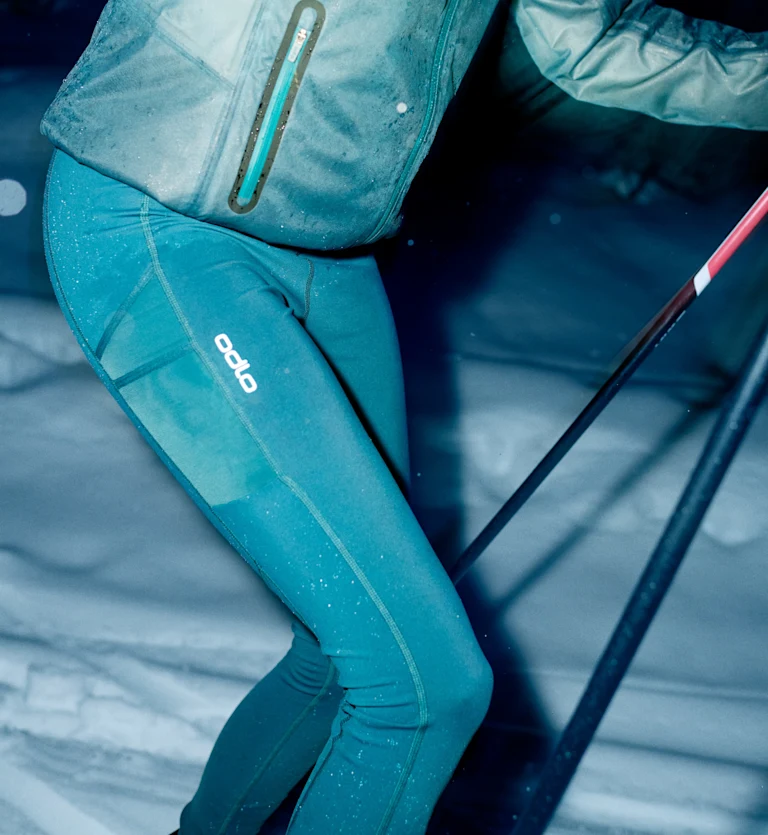
Opt for long, lightweight base layers under cross-country ski pants.
However, if conditions are mild – or you’ll be working extra hard – stick to cross-country tights. These offer an excellent range of motion for gliding further and skating harder. In icy winds, slim-fit cross-country ski pants protect from the elements, move with you and wick moisture. Most of our Odlo cross-country ski pants feature WINDPROOF, a breathable, water-repellent fabric that reduces the effects of windchill.
Headwear and gloves
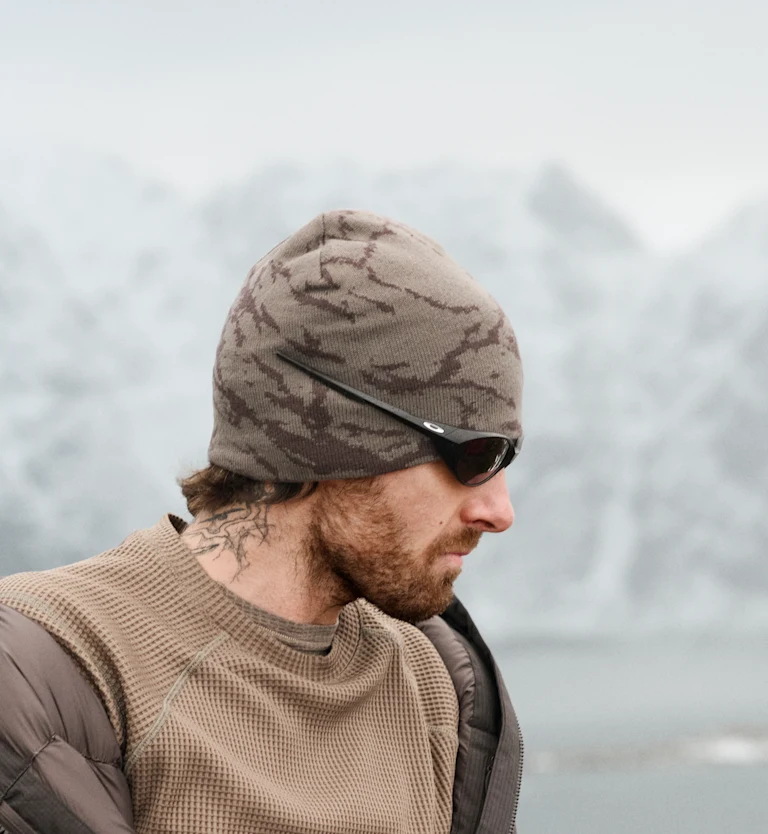
Don’t reach for the thick wool beanie you’d wear around a ski resort.
Choose a lightweight headband or beanie for your cross-country ski outfit so you don’t overheat. You also need reliable grip and dexterity, so thin, sweat-wicking gloves are best as cross-country ski gloves. In colder conditions, wear breathable, insulated lobster gloves for warmth without sacrificing control.
What to wear cross-country skiing at different temperatures
What you wear cross-country skiing depends on the temperature, the wind and how hard you work. Above zero, keep it light and breathable. Around zero to cold, add a windproof softshell. Well below zero, build up with a heavier base layer, a light insulated vest and windproof legs.
Conditions | Base layer | Mid layer | Outer layer | Legs | Accessories |
|---|---|---|---|---|---|
Above zero / spring skating | Base layer | Skip it, or wear it as your outer layer | Breathable jacket or a light insulated vest | Cross-country tights | Lightweight headband, thin gloves |
Around zero to cold (typical day) | Long-sleeved base layer | Usually not needed; save for extreme cold | Windproof softshell jacket | Tights, or slim windproof pants in wind | Lightweight headband or beanie, thin sweat-wicking gloves |
Well below zero | Heavier base layer top or thermal tights | Light insulated vest between mid layer and softshell | Windproof softshell | Windproof softshell cross-country pants over tights, or insulated cross-country shorts over full-length tights | Lightweight neck gaiter, insulated lobster gloves |
WHICH CROSS-COUNTRY SKI CLOTHING IS BEST IN NEGATIVE TEMPERATURES?
If just stepping outside freezes your hair, adjust your cross-country ski outfit by including:
A light, insulated vest between your mid layer and softshell
Thermal tights or a heavier base layer top
Windproof softshell cross-country pants over tights
A lightweight neck gaiter
Below -27 °C (-18 °F), tissue injury can occur in 30 minutes or less, so take extra care in extreme cold, as covered in our winter running guide.
WHAT'S THE BEST OUTFIT FOR CROSS-COUNTRY SKIING IN ABOVE-ZERO TEMPERATURES?
As mentioned, you’ll always work up a sweat cross-country skiing. However, if you’re skating in spring, adjust your outfit for cross-country skiing by:
Ditching the mid layer for a breathable jacket
Wearing your mid layer as your outer layer
Considering a light, insulated vest as outerwear
Now you have everything you need to guarantee a great cross-country day. Who else can’t wait for blue skies and the sound of skis gliding across the snow?
Classic vs. skating: does your outfit change?
Not much. For both classic and skating, your cross-country outfit follows the same three-layer system: base, mid and windproof outer. What changes is effort. Skating is higher intensity, so choose lighter layers and more ventilation. In spring, you can skip the mid layer for a breathable jacket. You'll likely sweat whatever the temperature.
Cross-country tights offer an excellent range of motion for gliding further and skating harder.
Vents, side zips and a half- or full-zip front let you manage your own micro-climate.
FAQ: cross-country ski outfit
TL;DR
Dress for how hard you work, not just for the cold: breathable layers, a windproof outer layer and warm hands and head. Now you have what you need for a great cross-country day. Who else can't wait for blue skies and the sound of skis gliding across the snow?