
guides
What to wear for winter running?
Get our best tips for running in the cold in this winter running guide
Marathon training. Speed runs. Keeping up your weekly mileage. No matter your goals, hitting them year round means lacing up in cold weather. The good news: with the right winter running essentials and knowledge, you can stay active - and healthy - all winter long.
What should you wear to jog in winter? What are the best shoes and socks to run in the snow or on icy roads? And how cold is too cold to run? This guide also covers how to adapt when conditions change during a run: wind, rain, darkness and temperature swings.
What should you wear running in winter?
Wear three layers: a base layer to move moisture away from your skin, a mid layer for insulation when it's colder and an outer layer against wind, rain and snow. Add a hat or headband, gloves and warm socks. Avoid cotton. Open a zip or stow a layer as conditions change.
Wear a base layer and an outer layer, and add a mid layer when it's colder.
Adapt your kit to the temperature, wind, rain and darkness.
Choose reflective details and wear a headlamp in the dark.
Vent or stow layers as you warm up, then change out of damp clothes afterwards.
Avoid cotton, as it is less breathable and slow to dry.
Table of contents
Running in the cold: what are the benefits?
Running in the cold keeps you moving all year, and that consistency is what counts. Winter also builds leg strength, especially on snow, and it comes with a simple reward at the end: a warm shower.
Why should you consider winter running? There's lots to recommend it. Anyone who's run through lots of snow can tell you it's a killer leg workout.
Most important, though, is consistency throughout the year. And let's be honest. Can you think of anything better than returning to a warm shower after you've conquered your chilly mileage for the day?
How cold is too cold to run?
There is no single cut-off temperature. On most winter days, you can run safely if you dress in layers. Check in with how you feel, and take extra care in extreme cold.
First things first. Consider your health when going for a run in winter. Some people experience discomfort breathing or a burning chest. Cold air can irritate the lungs, so check in with yourself and how you're feeling.
Then, think about the outside temp. Most days, just dress for running in the cold and you're good to go. But below -27℃ (-18℉), tissue injury can occur in 30 minutes or less. Even when you've geared up with a warm winter running jacket, gloves, ear warmers and socks, any expert will advise caution.
Winter running tips: before, during and after your run
Warm up your muscles and joints before you head out. Wear three layers plus socks, a hat and gloves. Start slow and drink water, even if you don't feel thirsty. Afterwards, change out of damp clothing and have a warm drink to heat up.
Before heading out, warm up your muscles and joints.
Use a three-layer system, plus accessories like socks, hats and gloves to stay warm and reduce the chance of injury.
During your run, start slow and stay hydrated even if you don't feel thirsty.
Afterwards, change out of any damp clothing and drink a warm beverage to heat up.
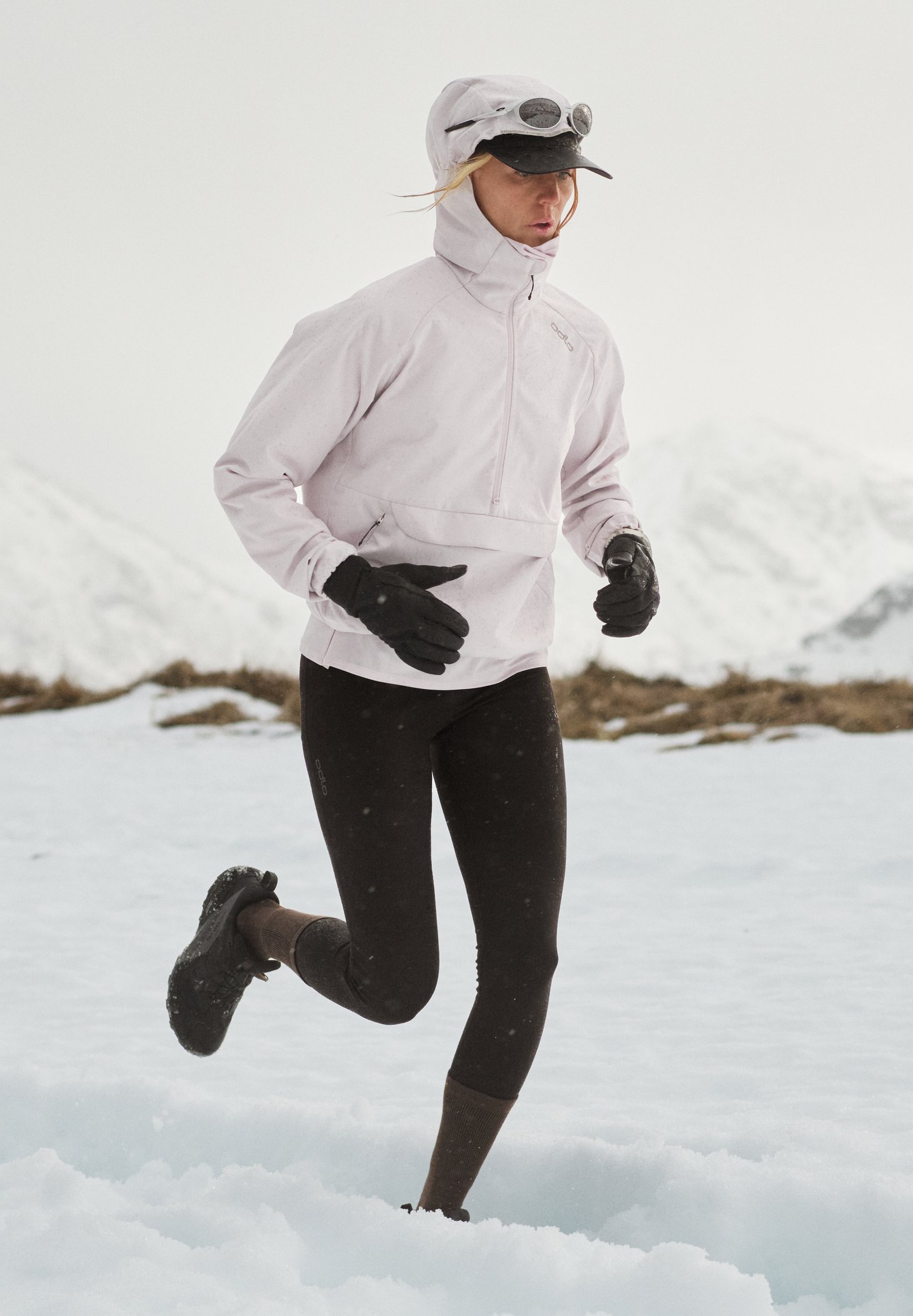
Wind jackets
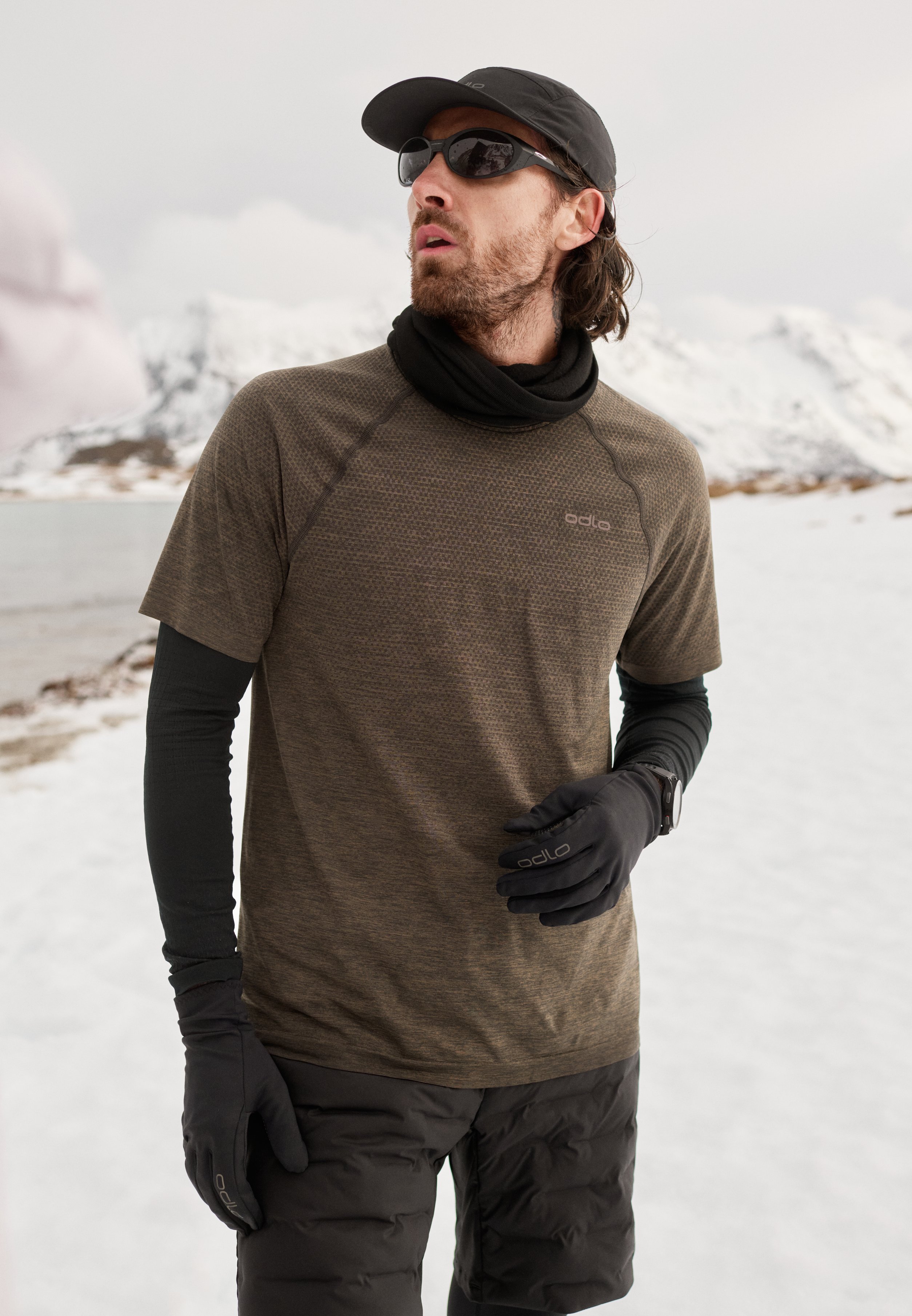
Base Layers
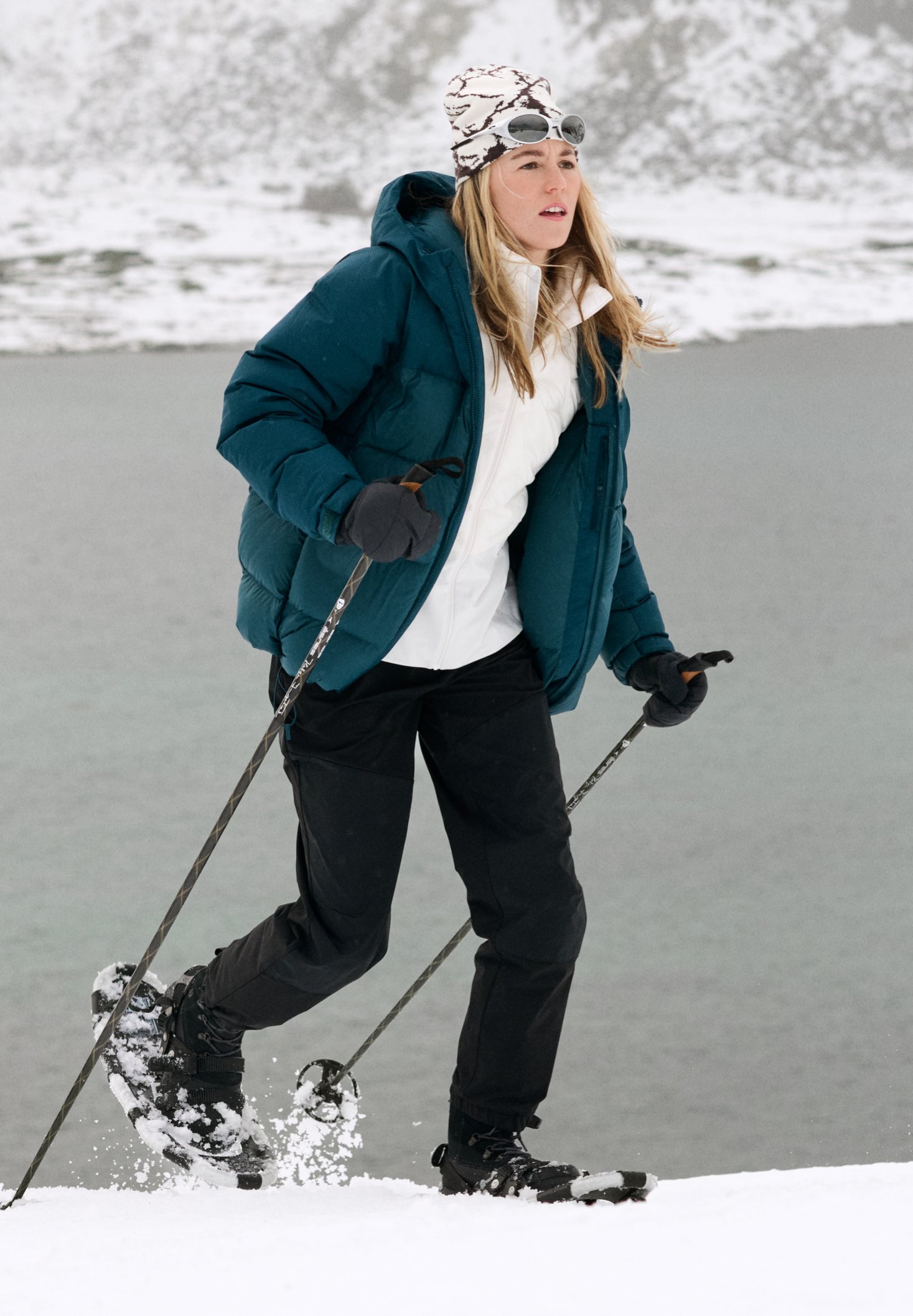
Down jackets
What to wear for winter running: the three-layer system
Start with a base layer, which pulls moisture away from your skin. Add a mid layer for insulation when it's colder. In milder temperatures, you can leave it off. Finish with an outer layer that seals out wind, rain and snow. Add a hat, gloves and warm socks, and adjust as your run goes on.
Your defence against cold weather is proper kit. Odlo’s running gear is designed to keep you moving no matter what mother nature throws at you. Layer up to regulate your temperature and take your cold-weather runs to the next level.
Running base layers
A good base layer pulls moisture from your skin to keep you dry and warm. Our long-sleeve seamless base layers dry fast, breathe easily and insulate in cool weather. Organic Body Mapping places ventilation and support (or insulation) in key areas, and they contain recycled materials.
Protect your legs too. Our warm running tights combine a windproof, water-resistant softshell on the upper thigh with warm, high-stretch fabric on the lower legs and rear.
Our merino-blend running socks wick moisture and help regulate temperature from warm-up to cool-down, with running-specific cushioning at the toe and heel. Make sure your shoes have good grip for icy patches on the road.
Mid layers for running
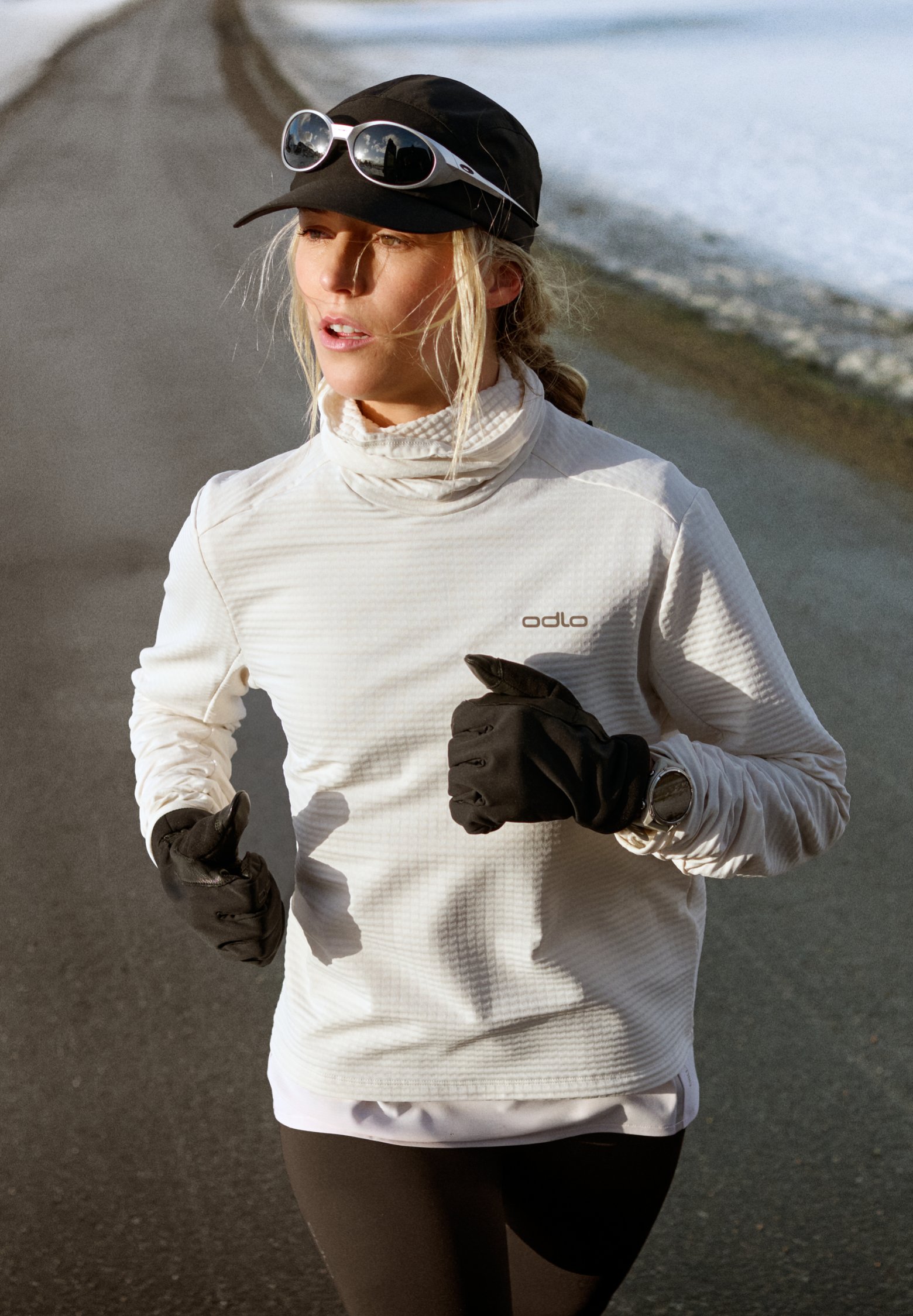
Mid layers like a long sleeve shirt or hoody add extra insulation on top of your base. They help keep you warm while staying breathable throughout your run. Our running mid layers include half-zips, which let you let air in or keep it out at any pace. Some have vapour ventilation areas along the sleeves and back. Some fleece mid layers have thumb loops and fold-over mittens for when you need extra warmth.
Jackets for running in winter
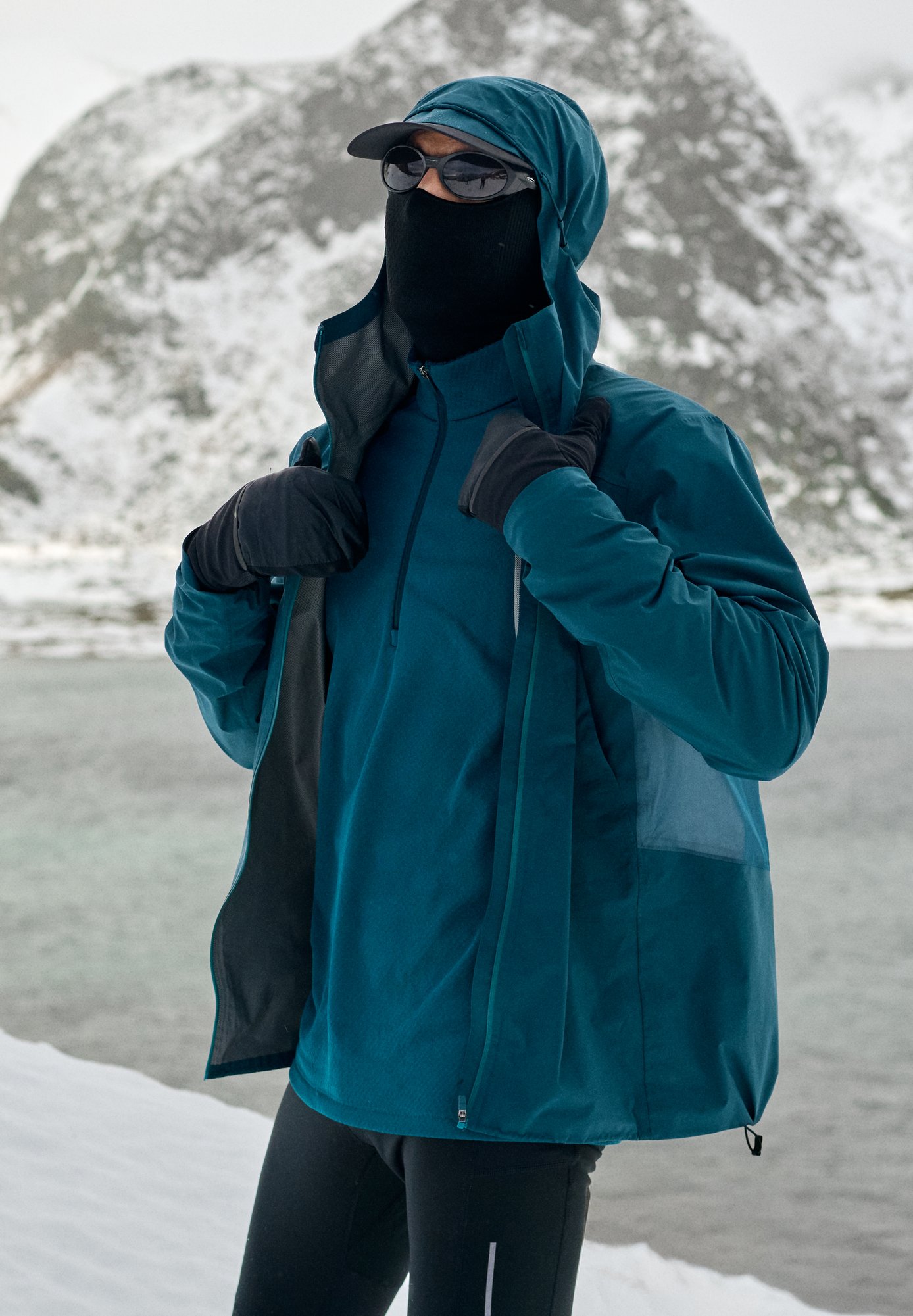
Outer layers shield you from the elements so you and your under layers stay warm and dry. The best jacket depends on the conditions. A softshell to repel wind and rain without adding bulky insulation is often enough. But if there's heavy rain in the forecast, look for a waterproof membrane. A running jacket should offer weatherproofing in front with a breathable back to help moisture escape. Ours include windproof softshells with 360-degree reflectivity and waterproof jackets with sealed seams. There are as many jackets as there are running styles, so explore Odlo's options in our jacket guide to find your match.
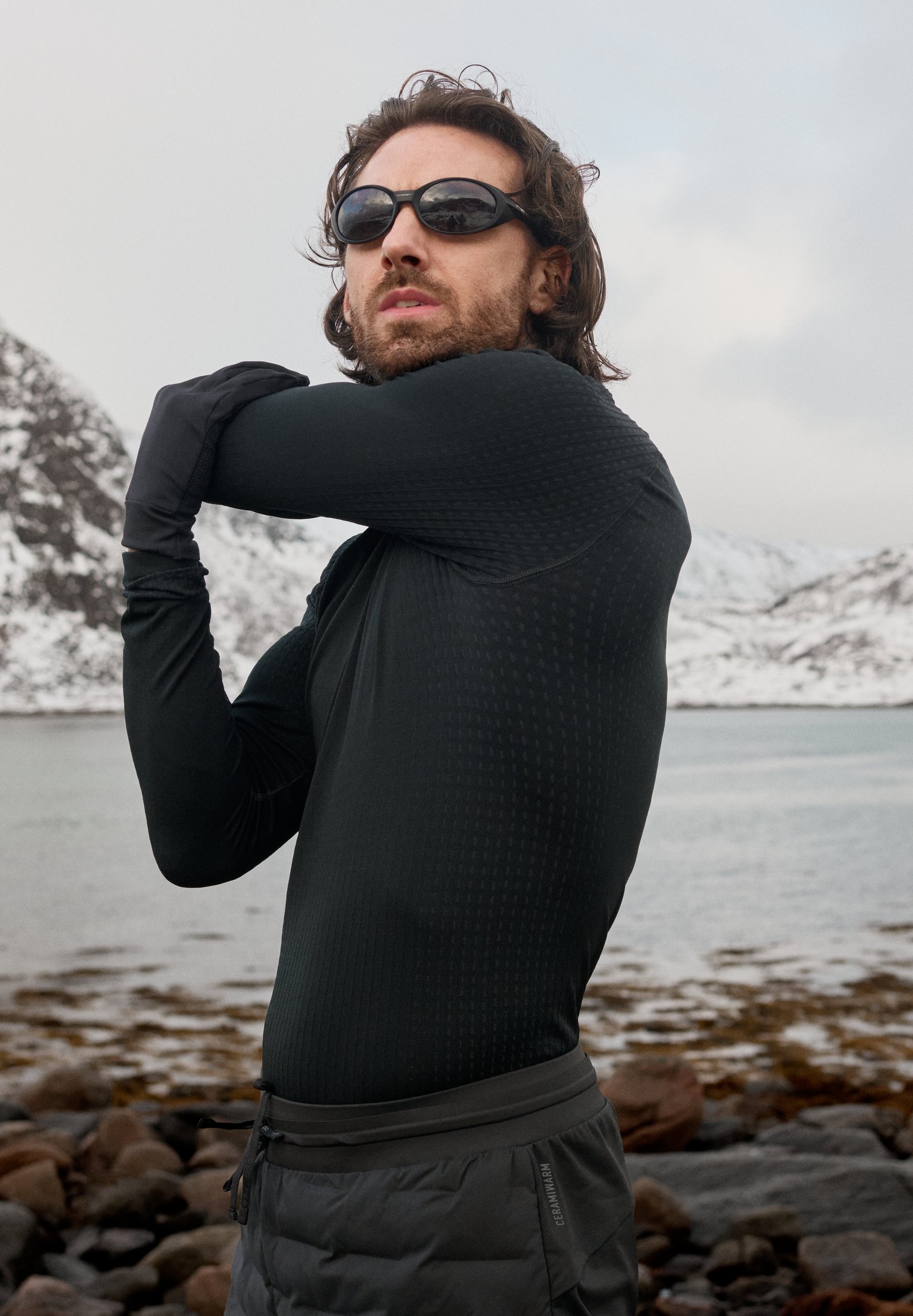
Base Layers
Mid Layer
Rain jackets
Accessories
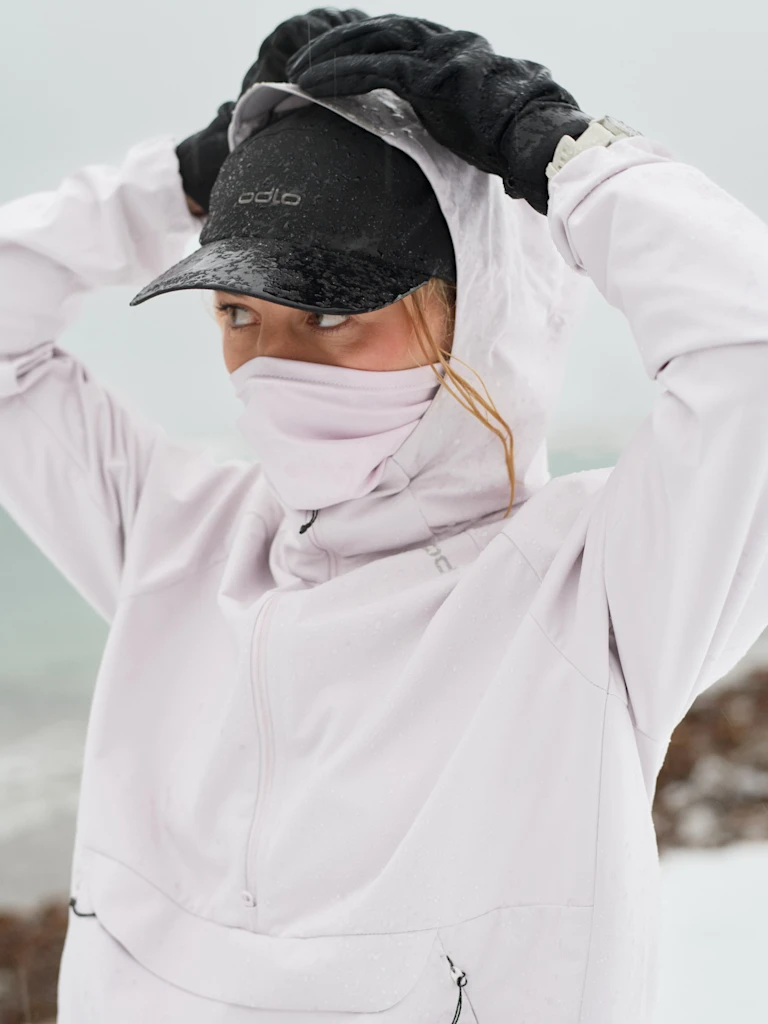
No winter running outfit is complete without some extras
Start with your ears. Our running hats include a windproof option with brushed softshell at the front and sides, plus reflective details. Our headbands are a lighter option for covering your ears. Our neck tubes block wind and trap heat, and they're made for winter runs. Your extremities cool quickly, so gloves are a must. Our range includes light windproof gloves with a foldaway windproof mitten and touchscreen compatibility. For dark, rainy days, choose insulated waterproof gloves with reflective accents. Gear good to go? Then suit up to make the most out of your winter runs.
What to wear running in winter by temperature
Two temperature bands cover most winter runs: 0 to 10 °C and below 0 °C. Dress in layers you can adjust as you warm up. Open a zip, pull off a hat, stow your gloves. In extreme cold, take extra care and plan your kit before you head out.
Temperature | Base layer | Mid layer | Outer layer | Legs | Hands, head and feet |
|---|---|---|---|---|---|
0 to 10 °C | Breathable base layer | Usually not needed, to avoid overheating | Water-repellent, windproof outer layer | Running pants | Thermal socks, hat or headband, gloves |
Below 0 °C | Long-sleeved base layer | Fleece mid layer | Lightweight running jacket, or one insulated running jacket instead of mid layer + jacket | Fleece-lined running tights, or base layer tights under running pants | Neck warmer, beanie, gloves and long thermal socks |
Shop by layer:
How to dress for changing conditions on a winter run
Weather changes during a run. So does your body heat. That's why layers you can open, stow or add matter as much as warmth. Start your run feeling slightly warm rather than already hot. Your body temperature rises quickly once you're moving, so you can adapt your layers as you go.
What if you warm up or cool down during your run?
If you start to heat up, stow a light mid layer. Put it back on if things cool down. A half-zip lets you let in or block out air at any pace. Have a warmer jacket handy for when you stop moving, as your body cools down quickly.
What should you wear running in the wind?
Wind draws heat from your body, so it makes the air feel much colder than it is. Choose a jacket with weatherproofing in front and a breathable back to let moisture escape. Fit matters too: room for layers underneath, but not so much that it flaps in the wind.
What should you wear running in rain, sleet or snow?
A softshell that repels wind and rain is often enough. If heavy rain is forecast, look for a waterproof membrane and taped or heat-sealed seams. Water-resistant fabric only sheds water for a time. Synthetic insulation keeps insulating even when wet.
How do you stay visible running in the dark?
When night comes early, many of our miles happen in the dark. Choose a running jacket with reflective elements, so drivers can spot you under streetlights and headlights. Consider a lightweight headlamp too. Our range includes jackets with 360-degree reflectivity and tights with 360-degree visibility.
Does dry cold feel different from wet cold?
Yes, and it changes what you wear. In dry cold, a protective outer layer with good insulation works well, and down is an option. In cold rain, choose synthetic insulation. Down doesn't handle moisture well, while synthetic fibres are water-resistant, so they keep insulating even when wet. Add a waterproof or water-repellent outer layer. If the wind is blowing hard, swap your usual base layer for a warmer long-sleeved one. Wind makes the air feel much colder than it is.
Adjusting on the go
Warm up your muscles and joints first, then start slow.
Open a zip to let air in when you heat up.
Stow a light layer when you're warm. Put it back on when you cool.
When your hands get cold, pull over a foldaway mitten.
Choose reflective details for when the light fades.
Change out of damp clothes as soon as you finish.
FAQ: winter running clothes
Dress in layers you can adjust, protect your hands, head and feet, and be seen in the dark.