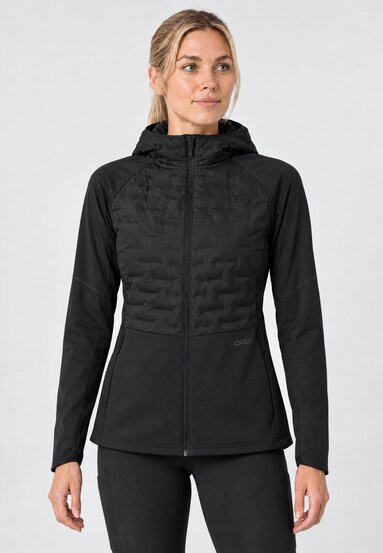
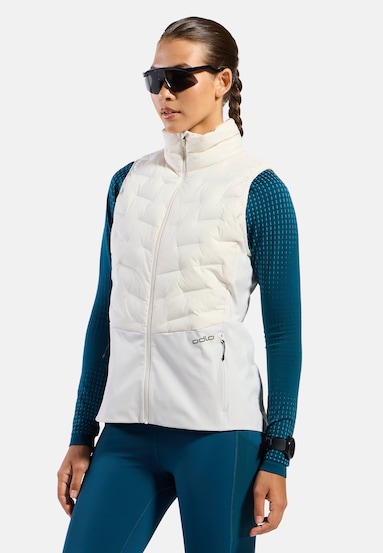
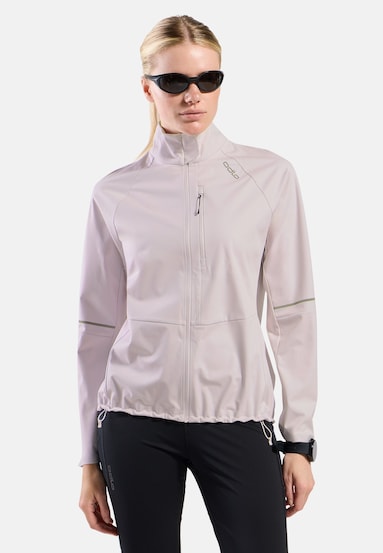
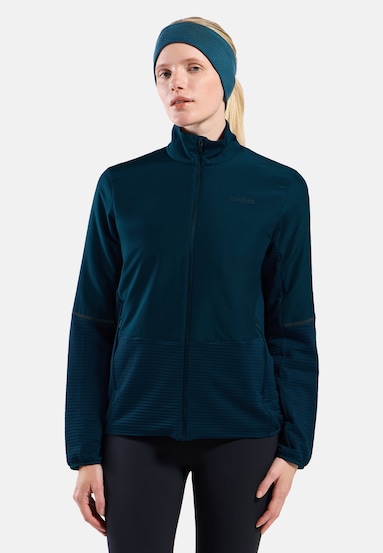
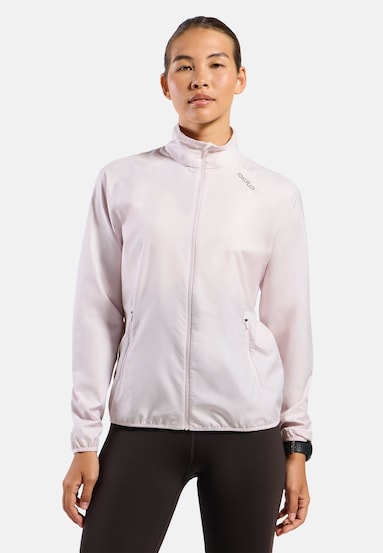
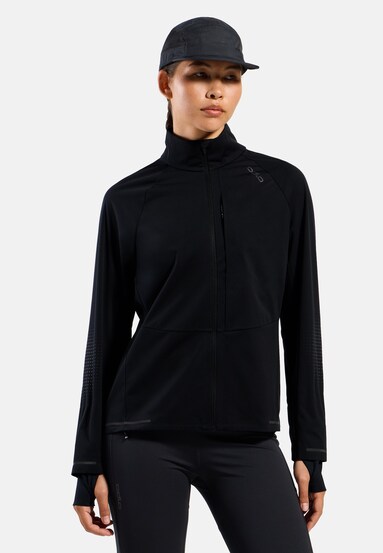
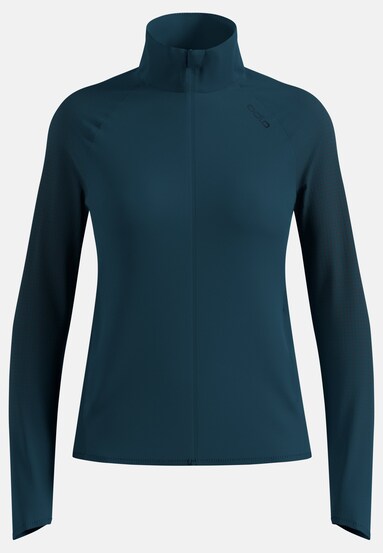
The right women's running jacket can decide whether you head out or stay in. Rain, wind and cold each call for a different solution. A running jacket for rain needs to be waterproof and breathable. For wind, a lightweight, windproof jacket is often enough. A winter running jacket needs warmth and ventilation in equal measure. Below you'll find short answers to the most common questions, so you can choose a jacket that suits the weather, your pace and your route. It should be one you barely notice while you run.
Waterproof women's running jackets: what matters in the rain?
A waterproof running jacket only keeps you dry when several things work together. Look for sealed seams, a waterproof zip and an adjustable hood with a peak that's shaped for running. Weight matters too. With Dual Dry, a running jacket can reach, for example, a 20,000 mm water column and 50,000 MVP breathability, and weigh 180 g in size L.
When is a lightweight windproof jacket enough for running?
A lightweight running jacket is enough for wind, in-between weather and short spells of drizzle. Mini ripstop fabric is windproof or wind-resistant, and a PFC-free DWR finish repels a little rain. Ventilation zones on the upper back let moisture escape as you pick up the pace. For steady rain, you'll need a waterproof jacket. A windproof gilet protects your core and keeps your arms free, which suits runs between seasons.
How do you avoid overheating when running in winter?
With a winter running jacket, warmth and ventilation matter equally. Look for an ultra-light three-layer softshell that's windproof and water-repellent, and that acts as a breathable membrane. Laser-cut ventilation on the back and body-mapped zones let water vapour escape. A magnetic collar opens for fresh air without flapping. Highly elastic sleeves with thumb loops help keep the warmth in.
Which layering system do you need under a running jacket?
Odlo introduced the three-layer principle in 1986: base layer, mid layer, outer layer. Your jacket is the outer layer, with a close-fitting base layer underneath. Synthetic moves moisture away, while Merino adds odour control, at 160 g/m² for light days or 200 g/m² for cooler ones. Warmth levels: X-Light (+15 to +25 °C), Light (+5 to +20 °C), Warm (−10 to +5 °C), X-Warm (−20 to −5 °C).
How important is a reflective running jacket in winter?
In winter you often run in the dark, early in the morning or in the evening. A reflective running jacket helps other people see you sooner. When you're choosing, look for reflective details. Some jackets offer 360-degree reflection, with a hyper-reflective print and reflective bands running over the sleeves and thumb loops. That makes you easier to see in low light, even when your arms are moving.