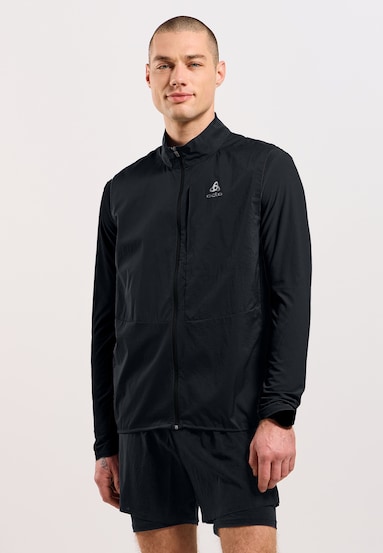
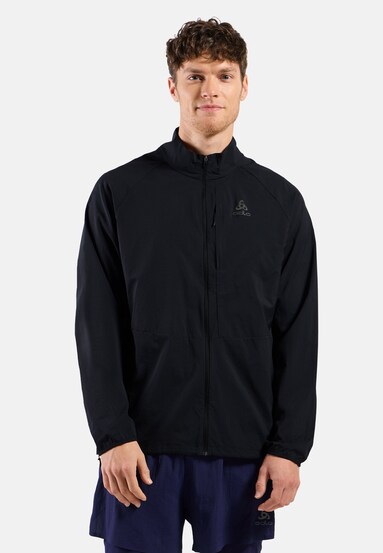
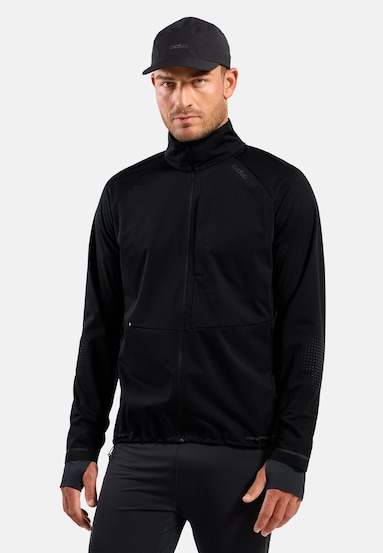
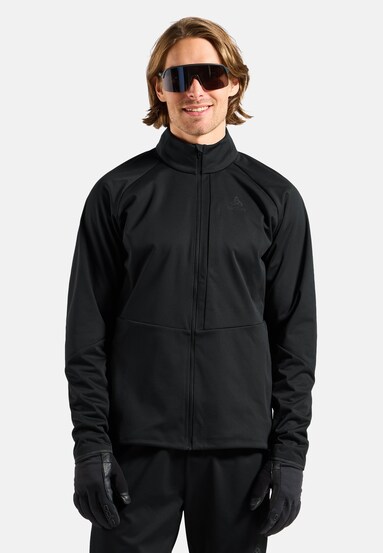
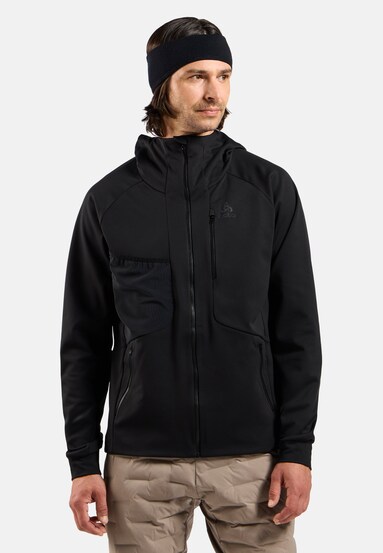
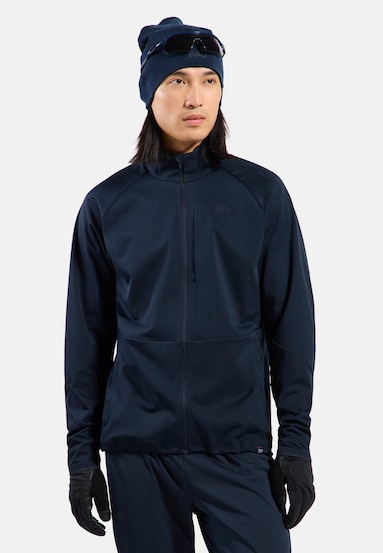
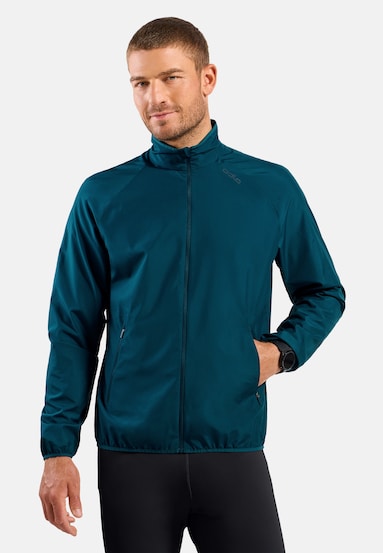
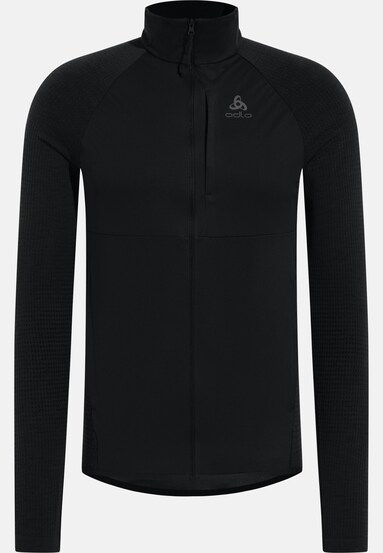
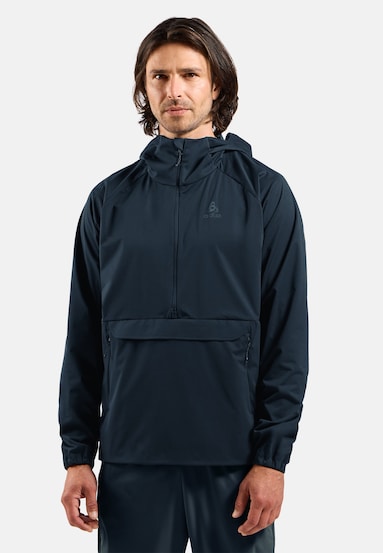
A men's jacket is more than a shield against rain — it's the defining layer between you and the elements. Whether you're after a lightweight waterproof jacket for wet autumn runs or an insulated hybrid for cold-weather training, three factors drive the decision: waterproof rating, breathability, and intended use. The higher the water column and MVP rating, the better the jacket keeps the weather out without trapping moisture inside. Look for a jacket with 4-way stretch and sealed seams to combine freedom of movement with genuine protection.
What is a hybrid jacket for men and when does it make sense?
A hybrid jacket combines two different fabric zones in a single garment: typically an insulating layer at the core and a more breathable or wind-resistant panel at the sides and sleeves. The principle is body mapping — warmth where you need it, ventilation where you don't. Odlo hybrid jackets featuring G-Loft thermal insulation with a honeycomb fleece lining are well suited to runners who start cold and don't want to overheat at pace. Choose this type of jacket when your activity involves variable intensity and you'd rather avoid carrying extra layers.
What's the difference between a windbreaker and a rain jacket?
A windbreaker blocks wind and light spray but isn't designed to hold up in sustained rain. A proper rain jacket has a waterproof membrane with sealed seams and a waterproof zip that keeps you dry even in heavy downpours. The Odlo Essentials windbreaker, made from 100% ripstop fabric with recycled content, is ideal for cool, windy conditions and packs into its own front pocket — easy to stash on a trail run or hike. For longer rain exposure, you need a jacket with at least a 10,000mm water column and fully sealed seams.
How does a rain jacket breathe without making you sweat underneath?
Breathability in rain jackets is measured in MVP (Moisture Vapour Permeability): the higher the number, the more effectively the membrane moves moisture from the inside out. Odlo's Zeroweight Dual Dry Performance Knit waterproof jacket achieves an MVP of 50,000 alongside a 20,000mm water column — one of the most capable combinations in the range. It's equally important to wear breathable base layers underneath, since a damp mid layer will significantly reduce the breathability of any outer shell. Rear ventilation zones and an athletic cut help airflow further.
How much water column should a good rain jacket have?
For activities in light to moderate rain, a 10,000mm water column is sufficient — as found on Odlo's X-Alp Performance Knit running jacket with its seam-sealed 2.5-layer membrane. For heavy or prolonged rain, ski touring or exposed trail running in the mountains, go for 20,000mm. The water column is just one part of the picture: seam quality, zip type and the DWR coating on the outer fabric all matter. A PFAS-free DWR treatment makes water bead off the surface rather than saturate the fabric, extending the jacket's protective performance.
Which jacket works for hiking?
Versatility is the key requirement for hiking jackets: the jacket needs to offer wind protection, water resistance and enough freedom of movement without adding unnecessary weight. For autumn and winter hikes, a jacket with light wool insulation or synthetic fill and a breathable recycled ripstop shell is a smart choice — it warms during rest stops and breathes on the ascent. In summer or on high-intensity terrain, a lightweight softshell or a packable windbreaker carried as a backup layer often does the job. Look for an adjustable hood, a practical pocket layout and sealed seams if you're likely to encounter heavier rain on the trail.