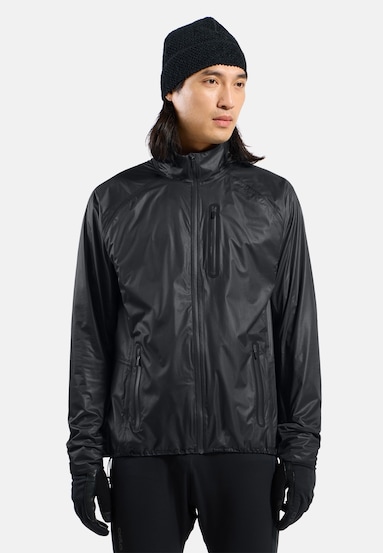
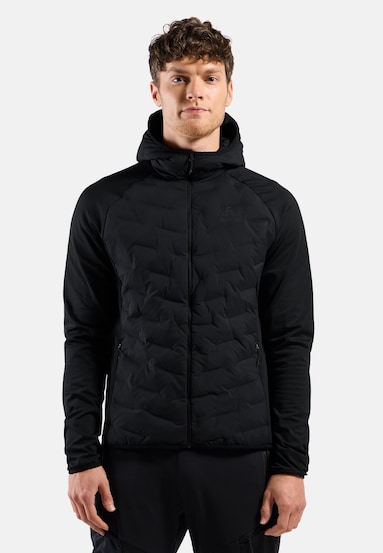
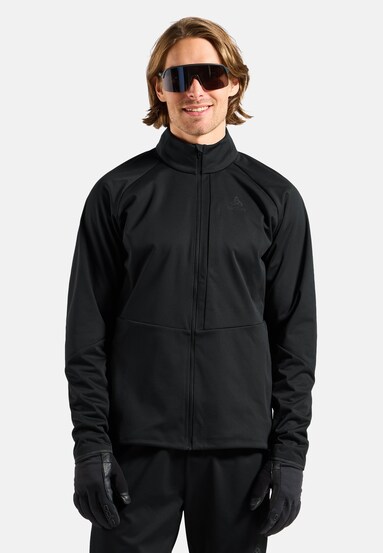
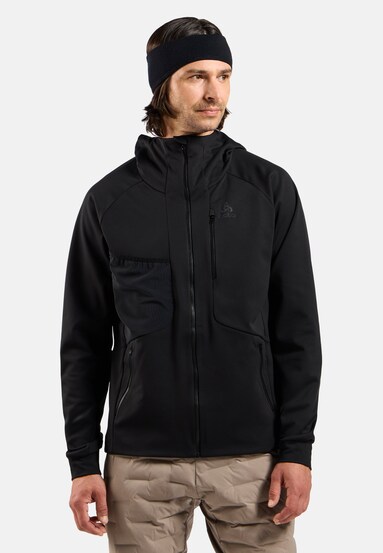
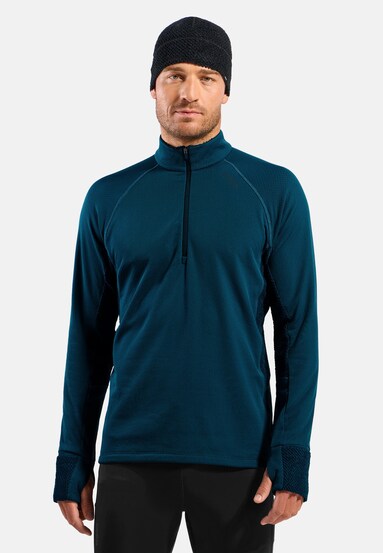
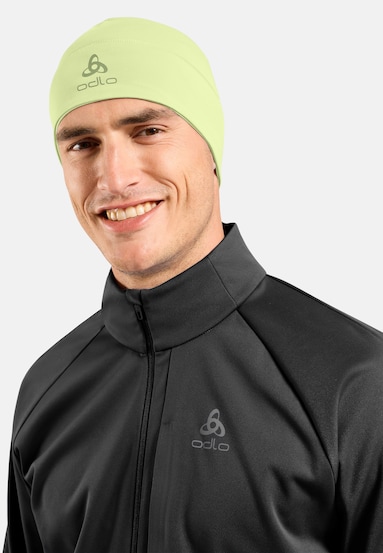
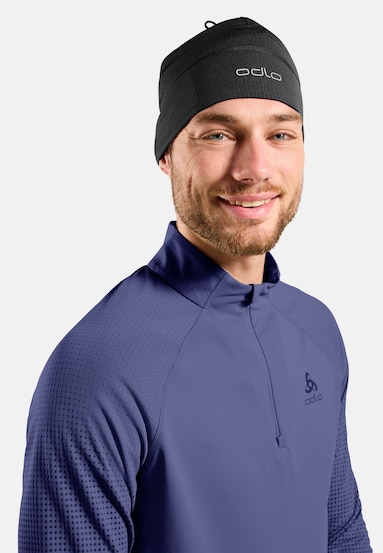
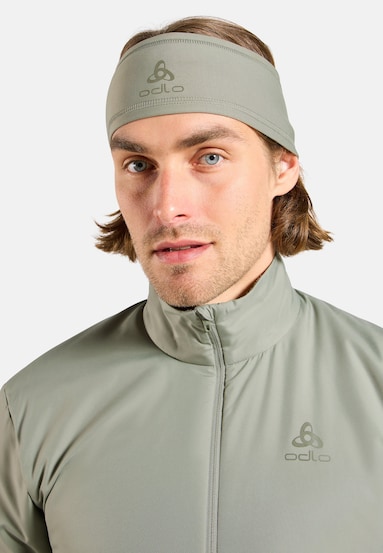
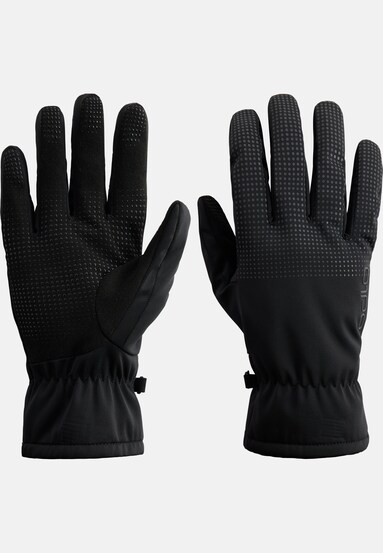
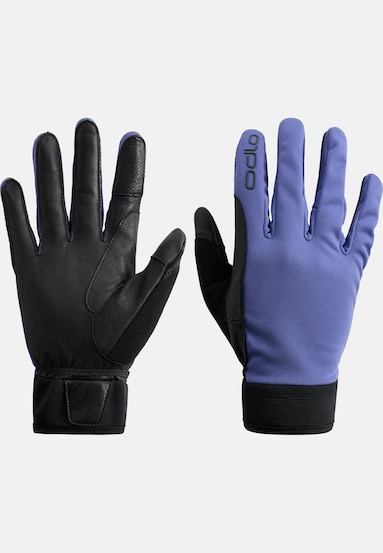
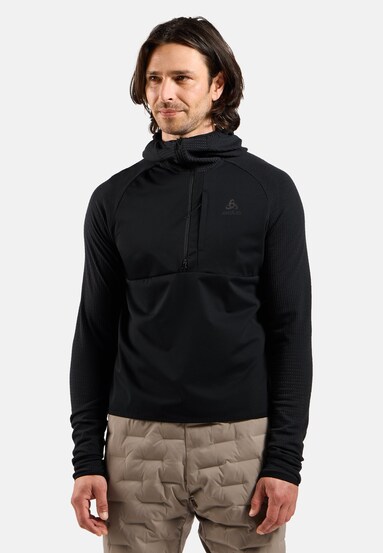
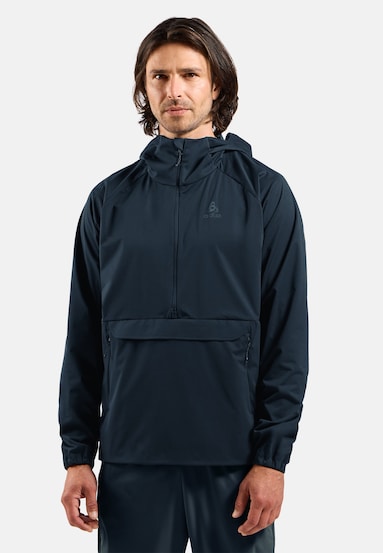
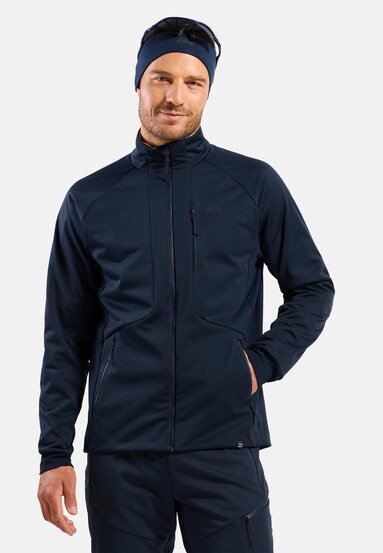
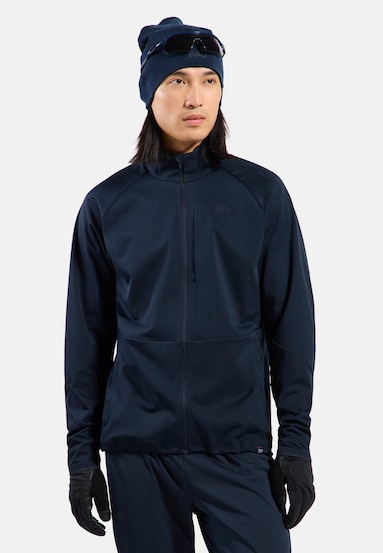
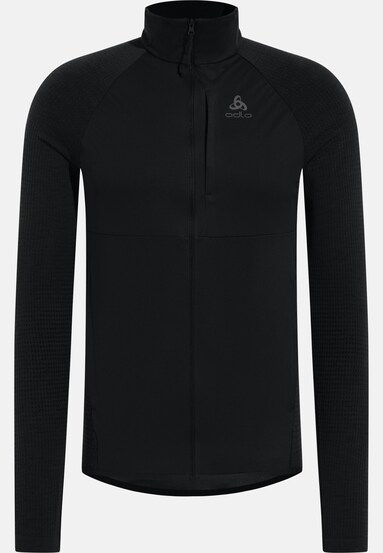
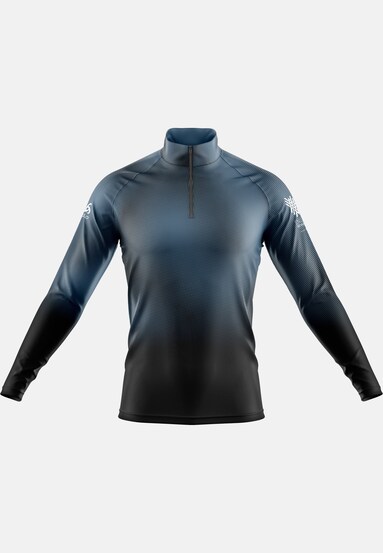
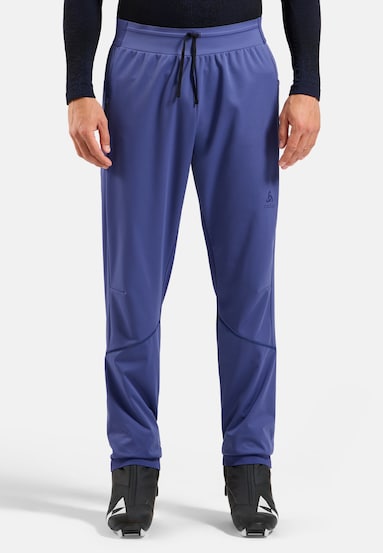
Cross-country skiing generates enormous body heat when you're moving and exposes you to bitter cold the moment you stop. The right men's cross-country skiing clothing has to do two things at once: move sweat away from your skin efficiently during effort, and protect you from wind and cold when you pause. The three factors that matter most are a close-fitting, movement-optimised cut, windproof outer materials in both jacket and trousers, and a base layer that actively regulates your body temperature.
Which cross-country skiing jacket suits which conditions?
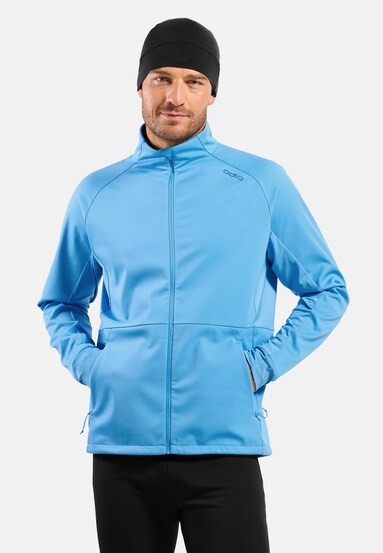
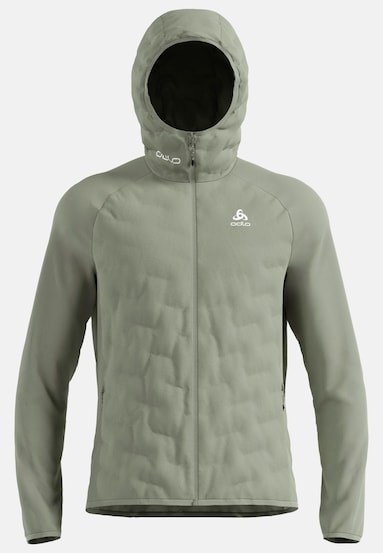
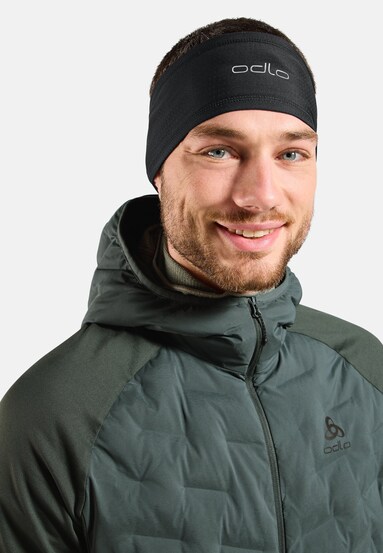
Choose your cross-country jacket based on the temperature range and the intensity of your training. For very cold conditions from −20 °C to −5 °C (corresponding to our range "X-Warm"), look for a windproof softshell jacket with a multi-layer construction in polyester-elastane, complete with an adjustable hood, waistband, and cuffs so you can fine-tune your fit even with gloves on. For moderate cold between −10 °C and +5 °C (our range "Warm"), a hybrid jacket combining a windproof softshell front and back with breathable merino panels on the arms and side panels delivers a great balance of protection and moisture management. If you want a jacket that covers both training and race day, look for all-round reflectivity for low-light sessions and a pockets setup that works for keys and energy gels.
How do I choose the right men's cross-country skiing trousers?
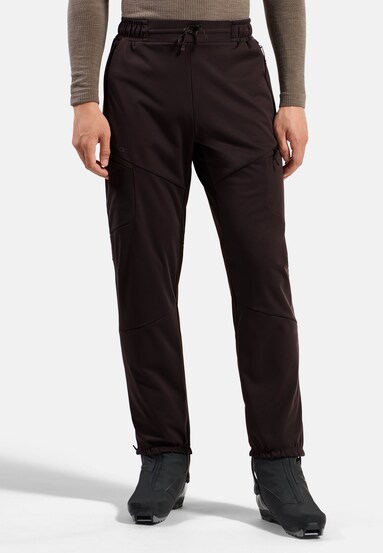
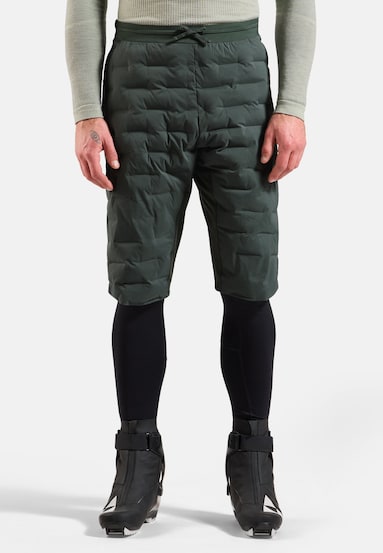
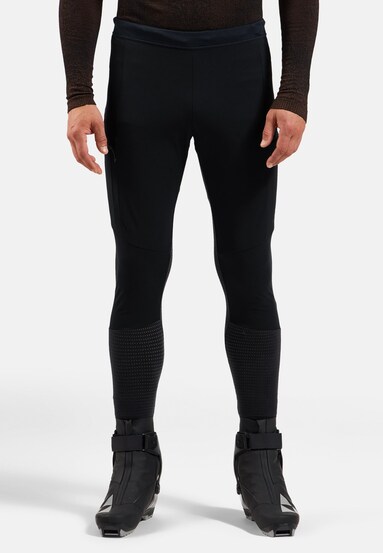
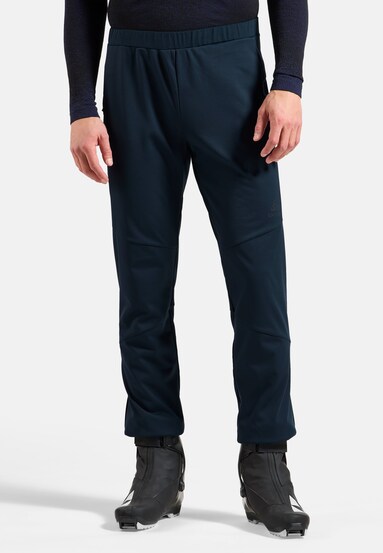
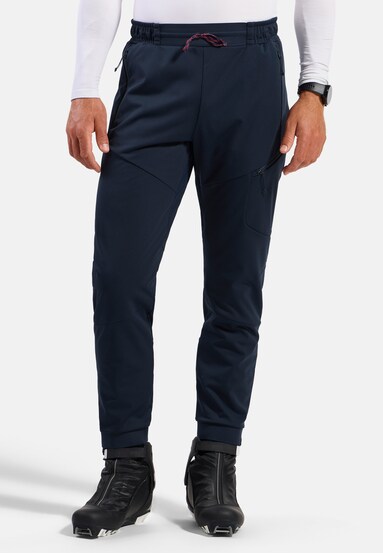
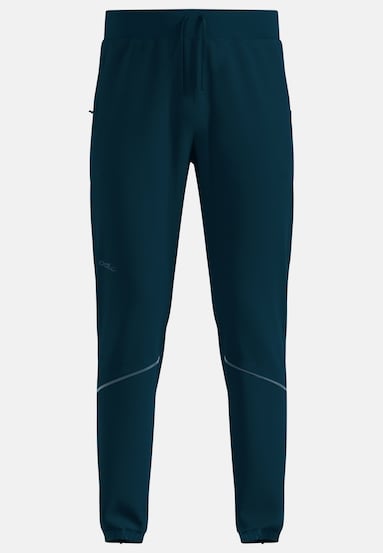
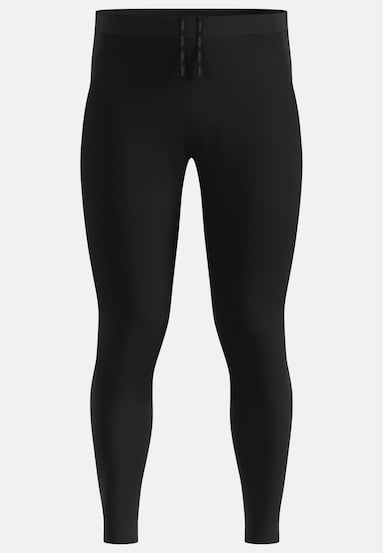
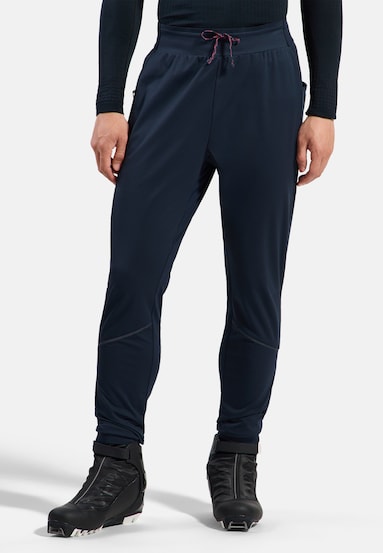
A good pair of cross-country skiing trousers must fit close to the body while giving you complete freedom of movement for every stride and glide. Tights in a merino-polyamide blend combine thermal regulation with excellent stretch and abrasion resistance, a strong choice for long sessions. For high-intensity training or race days when you generate a lot of heat, opt for fitted tights with flat seams and a streamlined silhouette to minimise friction. Match the model to your temperature window: pieces of our Warm range cover most winter days, while X-Warm offers extra protection in extreme cold.
What materials should good cross-country skiing clothing be made from?
Synthetic materials like polyester-elastane dry quickly, hold their shape and stand up to high-frequency training, making them well suited to fast skating technique. Merino wool blends regulate body temperature, resist odour and perform especially well on long classic tours where effort levels vary. For outer layers, a three-layer softshell construction provides wind resistance and weather repellency without sacrificing stretch. For the innermost layer - the base layer - a slim fit that sits close to the skin maximises the moisture transport system, regardless of whether you opt for synthetic or merino fibres.
How should I care for my cross-country skiing jacket and trousers?
Synthetic cross-country clothing jackets and trousers in polyester or polyester-elastane should be washed at 40 °C, turned inside out to protect technical coatings and prints. Avoid fabric softener at all costs, as it degrades moisture-wicking performance. Merino pieces can be machine washed on a delicate cycle at a maximum of 30°C using a wool-specific detergent, or washed by hand. Thanks to merino's odour resistance, you can get two to three sessions out of each piece if you air it out between wears. Always air dry your cross-country gear to preserve the technical properties over the long term.
Should I go for a race suit or separate cross-country jacket and trousers?
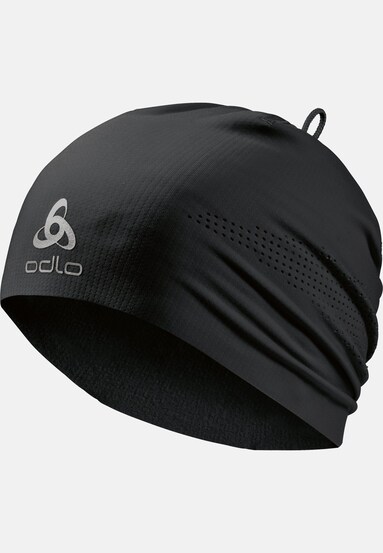
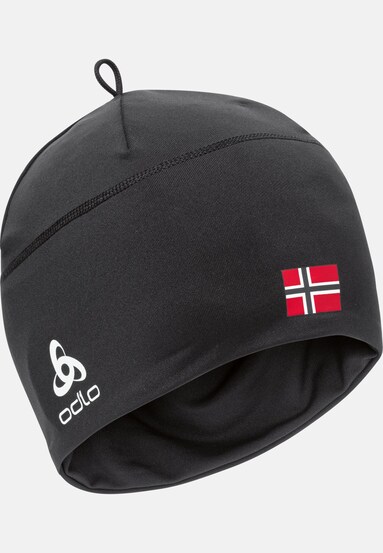
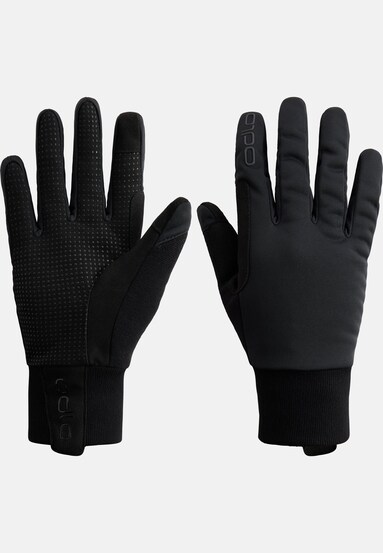
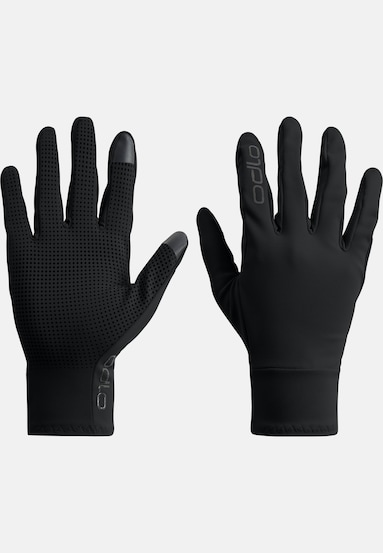
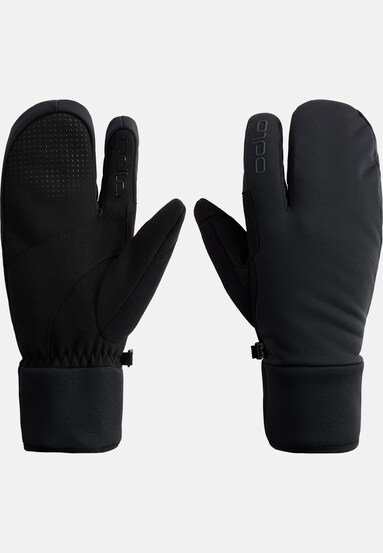
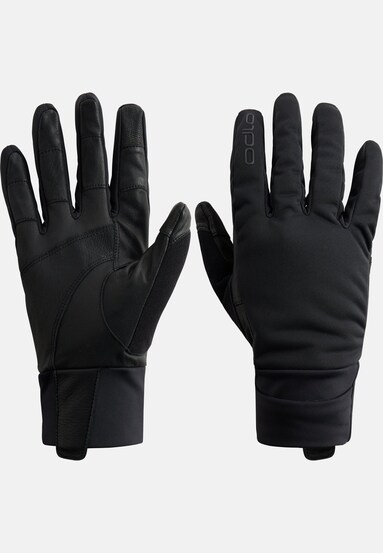
A cross-country race suit is the choice on competition day, when every gram counts: the one-piece design in lightweight polyester-elastane sits close to the body, reduces aerodynamic drag and allows full arm mobility. For training sessions and ski marathons where conditions can change throughout the day, separate cross-country clothing gives you more flexibility, you can adjust jacket or trousers independently for better temperature management. Always start with a close-fitting base layer as your first layer, add a windproof cross-country jacket when needed, and complete your kit with gloves and a hat matched to the temperature zone of your planned route.